

Sunday, October 30, 2011
What Happened to Us?


Saturday, October 15, 2011
How to Mince Lemongrass
 Sorry for the long drought of blog posts—it's our damn jobs; they really cut into our free time! Anyway, it's good to be back, and we'll start with a small but important tip that we discovered just today.
Much as we love Asian food, we've never found a good way of cutting lemongrass. No matter how much we peeled it, no matter how far down the stem we cut, we always ended up with woody little pieces that stuck out like bits of toothpick in whatever we were cooking. We tried lemongrass paste, but that was expensive and lacked flavor.
However, today we watched the Food Network show Chopped during lunch. If you haven't seen it, the premise is that contestants must whip up delicious dishes in very short time periods for the usual panel of picky foodies. On today's episode a contestant attacked a stick of lemongrass with efficient genius—she didn't bother chopping it, she simply grated it. Genius!
We'll cook something Vietnamese or Thai this week just so we can try this.

Saturday, October 1, 2011
Château de Nages in Costières de Nîmes


 We have been on a lot of winery tours, but this apologetically shortened tour was our best yet. (Unlike the U.S., where it is typically OK to just show up at a winery, in Europe the custom is to call ahead or arrange your visit beforehand.)
As we noted earlier, this 2011 harvest is a puzzling one, and we saw that in the overripe seeds swaddled in under-ripe meat and skins.
Back in the winery, we toured the wine storage tanks as well as a carbon dioxide filled room of viognier filled oak barrels that left us all woozy. Deep inside the winery bowels, a small room of glass vessels and implements serves as Michel's chemistry lab, next door to the room that holds the framed photograph of JT, Joseph Torrès and the three bottles of wine that Michel seeks to emulate: a Chateauneuf du Papes from the other side of the Rhône, a German Riesling and a Burgundy from La Tâche.

Michel and Tina believe that their Mediterranean terroir should speak loudly in their wines; that "we do not inherit the Earth from our ancestors; we borrow it from our children;" and that since turning to organic farming, their grapes and wine are better than they have ever been.
After all of the touring and answering some questions from us, Tina turned us over to a lovely woman who led us through Michel's lines of wine. The Réserve is more of an entry to the line, which rises in quality through the Chateau de Nages Vieilles Vignes, the Château de Nages JT (for great grandpa Joseph Torrès), the Nostre Païs, and the chin-out aggressive Lou Coucardié.
Michel is one to watch, because he's always thinking, always inventing, but always letting his land and his grapes speak loudly.
The winery's website is michelgassier.com.

Green Olive and Caper Sauce for Meat, Fish & Tofu

So, we tried to recreate it for our grilled tofu "steaks." The result was pretty close. This is a somewhat acidic sauce (but in a good way, as it helps take a somewhat bland piece of protein to a more interesting place. This is not a creamy sauce in the usual sense of what we typically think of as a sauce. It is more a collection of mildly pickled items blended in oil and wine.
We started with 2 Tablespoons of olive oil and 1 Tablespoon of butter or butter substitute in a medium-hot skillet. We added three diced shallots, three diced garlic cloves, and let them soften and become translucent. Then we added 14 diced green olives (we left the pimento in) and a Tablespoon of capers, followed by 1 Tablespoon of diced tomato (we used canned for convenience). After about 3 minutes of cooking, the mixture was ready for a quarter cup of white wine, which we let reduce and flavor the sauce. A little salt and pepper, and the sauce was ready to go.
It was great on the tofu we had marinated in red wine, soy sauce and olive oil, and it would have tasted great on the white meats and fish mentioned above.
This sauce would be good with either a crisp, non-oaky white (Sauvignon Blanc, unoaked Chardonnay or a Viognier).
Sunday, September 25, 2011
The 2011 Puzzling Grape Harvest in Europe

 After a lot of rain last winter — "perfect," says Michel Gassier of Château de Nages in the Rhône Valley of France — a good spring followed, but July and August were rainy and cold. The grape bunches stayed tight, letting in little air circulation. The Syrah grapes in the Rhône were drying out on the vine. The vineyard tenders waited and waited. Now they are rushing.
The white grapes are off the vines, but the wine makers found that while the grapes were barely ripe, the seeds inside were overripe, dark and turning bitter, instead of the almond taste they should have had at this point. The pulp inside the skins is still solid and holding onto the seeds tightly.
The aromatic maturity should match the maturity of the pulp and the skins. But it doesn't, so they'll have to pick their grapes and try to work some magic in the winery.
What does it mean for the 2011 European wines you will be drinking for the next 10 years? No one is quite sure. But they are harried and just a bit panicked in the world-famous vineyards of France, Italy and Spain. Stay tuned.

Monday, September 12, 2011
Arles, France: Land of Van Gogh and Spanish Influence


 We happened to arrive on the day of the town's festival of the bull, which shows the influence of nearby Spain and the caballeros who work the nearby camargue on their white horses. Although we didn't have any, the meal of the day was paella, served as a special at every restaurant and the many street tents set up for the day.
The other dramatic influence here is in the form of huge stone amphitheaters and other buildings built by the ancient Romans, and still being used today in many cases. This is a rebellious part of France historically, much more Protestant than the heavily Catholic rest of France, and a place where the rulers in Rome or Paris could always expect trouble and an argument that led to violence.
But like the rest of France, the food is wonderful. We lunched on salads because we were still sated from our rich restaurant meal the previous night. Salad Niçoise is one of the regional favorites, and ours was refreshing, light and just the right amount to keep us walking and gawking.

Sunday, September 11, 2011
France: Eat Your Way Through the Country

There is one adjustment you have to make as an American when you go to France. You have to eat like the French. They typically eat small portions and don't snack. But the food is divine — and rich. And despite the photo above, usually not so obviously rich.
On our first full day, we went to the local market, not the supermarket but the building full of stalls with luscious vegetables, beautiful cheeses, olives of may flavors and meat and fish of every stripe. We were stocking up for the pantry at our villa in a little village near the Rhône River.
Once weighed down with bags and bags of produce and other food, we stopped into a little brasserie for lunch, where Ruth had the Cappuccino
pictured above.
Despite our haul of goat cheeses, fresh green olives in brine, cranberry beans, tomatoes, leeks, eggs, eggplant tapenade, we decided to eat at the local restaurant, Chaverdille, because it is only open Thursday, Friday and Saturday.
It is the only restaurant in the little village, but the food was wonderful. Our theory is that it's difficult to find a bad restaurant in France, because they won't last.
The sauces are deep with flavors, and the preparation is almost always stopped at just the right line. And the wine is incredibly cheap. What's not to like?
Wednesday, September 7, 2011
Bargain Wine of the Week: 2009 Chateau l'Ermitage Costieres de Nimes
 One of the wineries we will visit during our stay in the Rhône region of France is Chateau l'Ermitage outside the city of Nîmes, where denim was invented and where the wineries blend the good taste of the Rhône with the low cost of the Languedoc and produce wines that are perfect for Eat Well, Eat Cheap.
We've tried both the 2007 and the 2009 red wines from Chateau l'Ermitage and they are a great bargain. Ruby red in color and fruity enough to enjoy before dinner, the wine also carries some hints of cinnamon and stone. But the tannins are very soft, so the taste is always pleasant.
This red is a combination of 50% syrah, 30% mourvedre and 20% grenache.
We've also tried the white blend from Chateau l'Ermitage, which is also widely available for around $10, and it is equally pleasing. The grapes are Roussanne, Grenache blanc and Viognier, and the taste is of peaches. This is a great summer sipper.
Tuesday, September 6, 2011
Arugula Pesto: Pesto di Rucola

Why all of the pesto recipes? Well, mostly because Saveur magazine celebrated pesto by publishing dozens of recipes. But also because you get a lot of ideas by exploring one type of food and seeing how subtle ingredient changes make for big flavor differences. It also helps when you crave a dish, but the key ingredient is missing from the pantry or fridge.
In wine, you'd call it a vertical tasting. Sip a bunch of chardonnays or syrah side-by-side and compare the difference between France, Chile, Spain and California — or between northern California and southern California.
We have a friend who loves pesto so much that she probably eats it weekly. We have another friend who loves it so much that he wants to be slathered in it when he's buried (presumably to have something good to eat in the hereafter).
This might be our favorite pesto. Since making it from the recipe in Saveur magazine's paean to pesto, we've tried it on pasta, vegetables, tomatoes, toast, tofu and chicken. This spicy concoction makes them all taste better.
Admittedly, we like arugula. We've mixed it with lettuce and spinach in salads to add a peppery flavor. We've put it on pizzas. We've even had salads that consisted of nothing but arugula and dressing. So, yes, we like it.
But this is arugula in a totally different context, and many people who eat it have to ask what the green ingredient is in this pesto. Along with the cilantro pesto, this was the most popular when we served a spread of pestos. The magazine says it's great drizzled over steamed artichokes or grilled fish.
Pesto di Rucola
2 cups packed arugula
1 cup extra-virgin olive oil (we used 3/4 and it was fine)
1/2 cup finely grated percorino or romano cheese
1/2 cup finely grated parmesan cheese
1/3 cup pine nuts
1 Tbsp. lemon zest
1 clove garlic, chopped
Kosher salt and freshly ground black pepper to taste
Process all ingredients in a food processor and season with salt and pepper to taste.
Monday, September 5, 2011
A Great Pesto Spread: Pesto Calabrese

Some pesto doesn't look or taste like pesto at all. But this great spread is from Rocco Arena, owner of San Rocco Restaurant in New York, and Rocco swears it is pesto. We found the recipe in Saveur magazine's big article in praise of pesto.
The magazine says this pesto is spicy, but we didn't find it spicy at all. We found it pretty bland, in fact, so our suggestion is to add a little hot red pepper to the mix. But even in its bland state, this spread will be a hit with your guests.
Pesto Calabrese
1 small eggplant, peeled and cut into 1/2 -inch cubes
2 tsp. kosher salt, plus more to taste
1/4 cup olive oil
1 red bell pepper, stemmed, seeded and minced
1/2 small yellow onion, minced
2 plum tomatoes, cored and minced
1/2 cup ricotta cheese
1/3 cup packed basil
Freshly ground pepper to taste
Place eggplant in a colander, toss with 2 tsp. salt and let sit for 20 minutes.
Drain and dry on paper towels, and set aside.
Heat oil in a 10-inch skillet over medium-high heat, add pepper and onion, and cook, stirring often, until soft and lightly caramelized — about 10 minutes.
Add eggplant and cook, stirring occasionally, until soft, about 8 minutes. Add tomatoes and cook, stirring, until soft, about 5 minutes. Transfer to a good processor and add ricotta and basil. Puree until smooth.
Season with salt and pepper.
Sunday, September 4, 2011
Cilantro Pesto: A Happy Marriage of Mexican and Italian Flavors

As we've said many times before, pesto does not have to be made with basil. Instead you can use parsley, arugula, sun-dried tomatoes, asparagus, pistachio, sage, broccoli, red pepper, garlic scapes or cilantro.
We gave Mark Bittman's recipe for Light Cilantro Pesto that can be used as a dressing on vegetables or as an underlayment for any entree that needs just spark of pep. For example, we've smeared it on the plate under the stuffed roasted peppers we serve as an appetizer.
Saveur magazine's celebration of pesto includes a cilantro pesto made heartier by the inclusion of roasted pepitas (pumpkin seeds). This pesto was the biggest hit when we laid out several pesto spreads as appetizers before a recent dinner party. It's salty. It's hearty. It's aggressively tasty. Saveur recommends it with roasted squash or grilled fish.
We made a lot of this cilantro pesto, so we've used it as a sauce on pasta (delicious!), as a dressing on blanched green beans and as a topping for fresh sliced tomatoes. This is a very versatile pesto indeed!
Pepita and Cilantro Pesto (from Saveur magazine)
2 cups packed cilantro
1/2—2/3 cup extra-virgin olive oil
1/3 cup toasted pepitas
1/3 cup finely grated parmesan cheese
2 Tbsp. fresh lime juice
1 clove garlic, finely chopped
Kosher salt and freshly ground pepper, to taste
Pulse cilantro, oil, pepitas, parmesan, lime juice and garlic in a food processor until finely chopped; season with salt and pepper.

Saturday, September 3, 2011
Pesto Rosso: Substituting Red for Green in Delicious Pesto

We normally think of pesto as being green and made with lots of basil right out of the garden. Saveur magazine's recent celebration of pesto noted that it is merely a paste, usually made in using a mortar and pestle, so it can be made with lots of different ingredients.
Today we tried a pesto that doesn't even depend on fresh greens from the garden (except a small amount of rosemary). Instead it's foundation is sun-dried tomatoes. We found it to be absolutely addictive and a wonderful hors d'oeuvre when spread on a nice slice of crusty peasant bread — or a cracker.
Pesto Rosso
1 cup virgin olive oil
1/2 cupe toasted almonds, chopped
2 Tbsp. rosemary leaves, minced
2 tsp. balsamic vinegar
2 tsp. sugar
1/2 tsp. paprika (or Aleppo pepper, if you've got it)
20 pitted oil-cured black olives
10 sun-dried tomatoes in oil, chopped
4 cloves garlic, chopped
Kosher salt and freshly ground black pepper, to taste
Process oil, almonds, rosemary, vinegar, sugar, paprika, olives, tomatoes and garlic in a food processor until finely chopped; season with salt and pepper.

Wednesday, August 17, 2011
Bargain Wine of the Week: Chateau d'Oupia Les Hérétiques 2009

The Rhône is by far the better known and produces consistently better quality wine. It's most famous output is Chateauneuf du Pape, and its wine tend to be a blend of Syrah, Grenache, and typically Mourvedre, Cinsault or Carignane.
But the Languedoc also has a very long and proud tradition of making wine since the days the Romans brought vines to this land nestled on the Mediterranean just north of Spain. Winemaking here has had its ups and downs, so it's wine is sniffed at by those who favor Burgundy or Bordeaux.
But we're in an up cycle, and that means bargains for the wine buyer, if you're willing to work your way through an occasional so-so bottle of vin.
The vineyards of Chateau d'Oupia are 100 years old and sit on the barren hillsides of the Minervois section of Languedoc. Proprietor André Iché has quietly been making good wine without the benefit of a big marketing campaign. He just keeps putting out what wine reviewer Robert Parker calls "ideal bistro wine ... with gobs of rich, peppery, red and black fruit."
This red wine, the 2009 Chateau d'Oupia Les Hérétiques, is a blend of Carignan and Syrah grapes. It probably won't get a 90+rating, but it should score in the high 80s, and at $10 that's still a great bargain.
Tuesday, August 16, 2011
Bargain Wine of the Week: Beso de Vino Seleccion 2009 is 'Shockingly Good'

It just so happens that a good deal of wine made across the border in Spain is made from the same grapes. Spanish wines, as we've noted often here at Eat Well, Eat Cheap, are a bargain that very often meets our criteria of less than $10 a bottle. And the quality is often superb enough to garner 90+ ratings from the big ratings "agencies."
As part of our testing, over the weekend we opened a Côte du Rhône and a Spanish wine from Cariñena. The Spanish red was a blend of 85% Syrah and 15% Garnacha (Spanish for Grenache). With a 90 rating from Wine Advocate, we knew it would be good, but we wanted to compare it to the Côte du Rhône.
Spanish wines in the lower prices often tend to be on the lighter side, but this one was not. It would have made a great wine for steak or lamb — very strong and hearty. Next to the Rhône, which was a good pre-meal wine in this case, the Beso de Vino was a perfect accompaniment to food.
Full of roasted coffee and muted fruit, this wine made Wine Advocate say that "it is shockingly good for the money." Can't disagree.
Monday, August 15, 2011
Oh, Yes, Another Recipe That Takes Advantage of Sage

But it also works as a great summer or autumn dish, especially when the squash and sage is prolific.
We had an old butternut squash sitting around, and we were clearly going to lose it before long. And our sage plant, after some pruning two weeks ago, is growing like a weed. So we uncorked two bottles of wine made from Syrah and Grenache grapes to let them breathe (in slowly disappearing glasses) and cooked the risotto.
The squash was smaller than called for. The sage ended up being twice as much as in the recipe. But the dish, accompanied by sliced tomatoes, was divine.
What a pleasant mid-summer treat.
Sunday, August 14, 2011
Bargain Wine of the Week: Domaine de Dionysos La Deveze Côtes du Rhône Villages 2009

We've stocked up on $10 bargain wines from the area to form a base for our tastings while we eat and drink our way around the northwestern bank of the Mediterranean. We've already set up two winery visits — to two vineyards that we've reviewed.
In our effort to taste and determine the differences in Rhone wines, we opened a Côtes du Rhône that we bought online for $11, just a dollar over our $10 limit (thinking that in France it will cost $10 or less).
The Domaine de Dionysos La Deveze Côtes du Rhône Villages 2009 was rated 90 by Wine Spectator, so it was pretty much assured that it wouldn't be a loser.
Indeed, this dark mix of Grenache, Syrah, Cinsault and Carignane was a great all-around buy. It sipped well before dinner and accompanied our summer meal of tomatoes and pasta extremely well. It smells and tastes of berries, with just a hint of flint to keep it from being too jammy.
Saturday, August 13, 2011
A Great Column on Mindful Budget Eating
Felisa Rogers has been writing a series of wonderful columns for Salon on eating cheap—but they're about much more than eating on a (very) tight budget. She explores the joys of foraging, of refusing to waste, of refusing to give in to financial despair, of appreciating. Her column today is a beauty.
We like Rogers's writing because it exemplifies our favorite quote from M. F. K. Fisher:
“ . . . there is a basic thoughtfulness, a searching for the kernel in the nut, the bite in honest bread, the slow savor in a baked wished-for apple. It is this thoughtfulness that we must hold to, in peace or war, if we may continue to eat to live.”
We like Rogers's writing because it exemplifies our favorite quote from M. F. K. Fisher:
“ . . . there is a basic thoughtfulness, a searching for the kernel in the nut, the bite in honest bread, the slow savor in a baked wished-for apple. It is this thoughtfulness that we must hold to, in peace or war, if we may continue to eat to live.”
Tuesday, August 9, 2011
Five Tasty Ways to Use Sage in the Summertime

Here are five delicious ways to use sage in the summertime.
1. Sage and walnut pesto on pork or potatoes. This hearty pesto even works on the grill!
2. Crunchy fried sage leaves to garnish pasta or risotto or eat by themselves as a cocktail snack.
3. Roast potatoes with sage. Line a pan with whole sage leaves, then cover them with halved potatoes. The result: crunchy, creamy bliss.
4. White beans with sage and garlic. There's nothing easier than boiling some white beans with sage, garlic, and a little olive oil. You can eat them hot or cool them to use in a summer salad.
5. Sage vinaigrette. Add some chopped sage to a mustard vinaigrette for a tangy dressing on grilled or steamed vegetables.
Sage is a very easy plant to grow; it's disease-resistant and likes dry conditions. Depending on your climate, some plants will "winter over," providing years of tasty service.
Wednesday, August 3, 2011
Best Bought Veggie Burger Ever!

There are a few inherent problems with veggie burgers. Homemade ones can taste great, but they tend to be too soft to grill, so they can't provide the full burger experience. Processed burgers, on the other hand, too often are dry, bready, and tasteless.
But Morningstar Farms' chipotle-spiked black bean burgers grill beautifully, developing a "meaty" crust that could satisfy the most bloodthirsty carnivore. They're firm, flavorful, and, at a quarter pound apiece, satisfyingly large. They are heaven.
We discovered them at Costco, promptly finished a box, then went back for more, with some trepidation; Costco has a habit of dropping products that don't quickly catch on. Up and down the frozen aisle we prowled, worried that we'd never see the burgers again at a Costco price. Nothing . . . until we turned a corner and saw that Costco had devoted the entire "end cap" of its freezer section to a gigantic display of the burgers! As Costco is hardly a vegetarian paradise, we have to assume that this product is catching on with everybody.
Try them! You may never go back to hamburgers.
Tuesday, August 2, 2011
Burning Man ... in Spirit, Anyway

Still, we're glad that other people go to Burning Man, and the website is a joy to explore. We particularly like the section on how to cook well for yourself in a place with no piped-in water or fuel. The tips and recipes would work just as well for camping, and some of them would be great even for air-conditioned suburbanites like us, looking for some easy, delicious, healthy food as the hot summer unfurls . . .

Saturday, July 30, 2011
Bargain Wine of the Week: 2009 Bogle Sauvignon Blanc
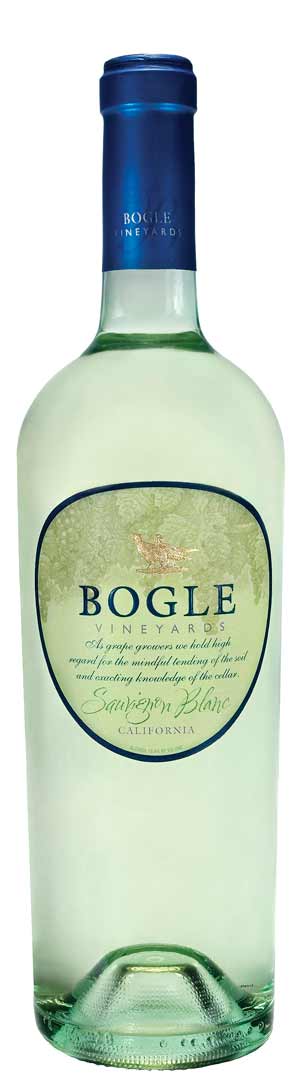 It's summer, and that means sipping a light, crisp wine on the patio or next to the lake. Sparkling wines, especially the light proseccos and moscatos from Italy, are a sure bet.
But not everybody likes a sparkler, so the next best bet is a Sauvignon Blanc. They are crisp, light, refreshing and they go with just about every appetizer — and they're great just for sipping. If you're a Francophile, buy a Sancerre, which is made from Sauvignon Blanc grapes.
The Sancerres are good, but they are a bit more expensive than American Sauvignon Blancs. Now, every wine shop has a selection of these summer favorites, but many of them are green and grassy and a bit harsh. How do you find one that is a) low-priced; b) guaranteed good; and c) available where you live?
Our sure bet of the summer is Bogle's 2009 Sauvignon Blanc (or any other year for that matter). It can often be had for $7.99, and rarely costs more than $10. Wine Spectator rated this wine with the familiar pheasant on the label at 88 and a Special Value.
Here's a tip: whenever you're watching your pennies and you're looking for a wine that won't break the bank but will taste good, put a Bogle in your shopping cart. If you're guessing at the wine store, you might as well make an intelligent guess. It's close to a sure thing.
Tuesday, July 26, 2011
More Hot-Weather Relief: Mango Salad

The other night we shredded a green mango and made a salad that was tart, sweet, a little hot, and completely delicious. This recipe makes two very decent portions; if you want to feed more people, it's easily doubled or even tripled.
Green Mango Salad

1/2 cup chopped cilantro
1/3 cup chopped basil
2 scallions, minced
1/3 cup roasted chopped peanuts
Dressing:
2 T. fish sauce
3 T. lime juice
4 t. brown sugar
1 t. chili garlic paste
1. Shred the mango, either using a grater or (much quicker) the shredding blade on a food processor.
2. Mix with the cilantro, basil, scallions, and peanuts.
3. Pour dressing over all, and serve immediately.
Serves two.
Friday, July 22, 2011
Hot-Weather Relief

First, drinks. This is perfect weather for a Liberator; if that's too strong for your taste, how about some nice sparkly Prosecco? Pour yourself a glass of something cool, put on some good music, pull out your knives, and get to work on a quick, light, delicious meal.
A salad composed of cool ribbons of zucchini dressed with lemon, mint, and Parmesan would be perfect on a day like this. So would a slaw of raw beets and carrots bathed in tangy Dijon. This watermelon salad with mint and feta cheese can be either a first course or a light main course. And this bean sprout salad mixes bold flavors with light veggies.
Want something more substantial? How about a crunchy Indian salad?
For dessert, all you need is some cold fruit, and maybe a little bit more Prosecco.
Tuesday, July 19, 2011
You Can Make Tapas at Home
Now that we're back, we can write a post we've been meaning to write since Ruth's birthday back in June.
We celebrated with a trip to Jaleo, a tapas restaurant run by José Andrés that has gotten great reviews. As we don't eat out that often, we tend to be extra-critical of bad food and extra-delighted by good food; if the service and atmosphere also deserve high marks, we're disproportionately thrilled. This was one of those meals. Everything was great, from the opening dish of olives with tiny cubes of marinated Manchego cheese to the final bowl of olive oil ice cream and grapefruit sorbet. Best of all, we figured that we could reproduce our favorite dishes back home.
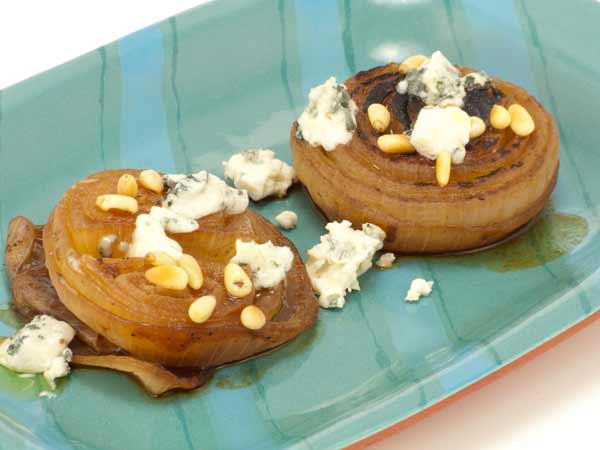
Usually, it takes at least a few tries to successfully approximate a restaurant dish, but the first one we tried—poached onions with blue cheese and pine nuts—came out great. We were astonished by how easy it was.
Because this can be made ahead of time and either warmed up or served at room temperature, this would make an excellent first course. We plan to use it as part of a homemade tapas lineup (our next post, also poached from Jaleo: stuffed peppers with tapenade).
You'll notice that one of the onions in the photo looks charred. That's because we experimented with grilling half of the onions in the recipe, wondering if that would make a difference. It did seem to add flavor, though the nongrilled onions tasted great too.
Onions with Blue Cheese and Pine Nuts
Two fat onions
6 cups vegetable or chicken stock
Salt and pepper to taste
1/4 cup crumbled blue cheese
1/4 cup toasted pine nuts
2 T. olive oil
1. Peel the onions and halve them through their centers, leaving their stem ends intact so they don't fall apart during the poaching.
2. Place them cut-side down in a deep skillet and pour the stock over them. Bring it to a boil, then reduce to a low simmer. Let the onions simmer until the stock is mostly evaporated and they are tender all the way through—depending on the size of the onions, this can take as a long as an hour.
3. While the onions poach, toast the pine nuts and crumble the blue cheese.
4. When the onions are tender, remove them to a plate, sprinkle them with pine nuts and blue cheese, and drizzle them lightly with olive oil.
Serves four.
Wednesday, June 29, 2011
Hot-Weather Treat: No-Fat Chocolate-Cherry Shake

Our inspiration came from Dr. Joel Fuhrman's book Eat to Live, which advocates a diet high in fruits and vegetables. Though some of his recommendations are a bit extreme for the likes of us—we're not sure a longer life would be worth living if it did not include olive oil—we're all in favor of fruits and vegetables, so we've been looking over his recipes with interest. One, for a chocolate spinach smoothie, gave us the idea for this chocolate-cherry shake, which we've been happily slurping for weeks.
Although this calls for quite a bit of spinach—a couple of fat handfuls—you'll never taste or see it in the finished product. You'll just have the invisible satisfaction of knowing that this cold, chocolatey deliciousness packs a lot of nutrition.
Chocolate-Cherry Shake
3/4 cup coconut water (you can also use any kind of milk)
Heaping 1/2 cup frozen pitted cherries
2 T. cocoa powder
2 dates, pitted
2 ounces baby spinach (about two good-size handfuls)
1/2 cup ice cubes
Place all ingredients in a blender, and let it rip. Makes two decent portions or one monster portion.
Thursday, June 23, 2011
It's Summer: Greens, Greens and More Greens

Even if you don't receive a CSA box full of greens every week like we do, you probably either grow them yourself or you find your supermarket produce section sprouting some interesting leafy greens this time of year.
They're cheap. They're really good for you. And they're versatile if you use your imagination: in salads, steamed, cut up in soup or roasted into appetizer chips.
In last Sunday's New York Times Magazine, Mark Bittman published a matrix of greens by type and offered dozens of ways to deal with them. Here's the gist of his article and matrix.
Romaine is fine. But dandelion, tender lettuces, chard and arugula (real arugula, not the “baby” kind they sell in most supermarkets) are all ubiquitous this time of year, and they can be as flavorful as the juiciest tomato. You can make a different salad every day for weeks without repeating yourself.
Whatever strange green you find in your kitchen this time of year, the article suggests a tasty way to eat it.
Monday, June 20, 2011
Good Fast Food: White Beans with Greens and Sausage

Our last batch was inspired by some leftover greens from the CSA box. We still haven't identified them—they resembled broccoli raab sans blossoms—but after we sautéed them we decided that they were a bit too chewy and strong-tasting to eat on their own, even with a splash of fruity fig vinegar. Though we were definitely not crazy about them, we're committed to using every molecule of our precious (and not inexpensive) CSA produce, so tossing them was out of the question.
We remembered that greens go well with white beans, so we cooked a pound of Great Northerns with plenty of crushed garlic and sage. When the beans were done, we removed most of the cooking liquid (saving it for soup) and added the mystery greens (cut in smaller strips to mitigate the bitterness), a can of fire-roasted tomatoes, four crumbled veggie sausages, a drizzle of olive oil, salt, and pepper.
(Though we cooked our beans from scratch, you could use a few cans of rinsed white beans for a nice fast meal.)
Our impromptu stew was wonderful; the bitter greens played well with the mild beans and salty sausage. But any kind of greens would do—chard, kale, collards—and roasted red peppers would have made an excellent substitute for the tomatoes. Plain diced tomatoes or halved grape tomatoes also would have worked. Chunks of Italian sausage (or Tofurky!) would have been delicious.
The lesson: Don't give up on something you've cooked, no matter how much it has disappointed you—chances are that with a little tweaking, it can be part of another dish that you'll like much better.
If you opt for a cold salad, remove all of the bean cooking liquid and add a little more olive oil.
Thursday, June 16, 2011
Bloody Mary Salad Dressing: Apéritif without the Alcohol

One was the result of a visit to a Vietnamese-run, Chinese-Vietnamese restaurant in Rapid City where the chef-owner showed us how she made the delicious sautéed tofu (recipe to come) we enjoyed.
The other was the Bloody Mary dressing served on our green salad at Jake's in historic Deadwood. Jake's is right on main street but is hard to find because the sign is small — but the reward is huge. We had a great meal. And, if this sort of thing helps you go there, it is owned by Kevin Costner, who fell in love with Deadwood while filming "Dances With Wolves."
Our green salad was bathed lightly in a Bloody Mary dressing that awakened our taste buds.
With a little experience making Bloody Mary's, a little imagination and some vague help from the waiter, we've reconstructed the dressing:
Bloody Mary Salad Dressing
4 Tablespoons juice from a can of diced or whole tomatoes
2 Tablespoons olive oil
1 Tablespoon red wine or sherry vinegar
2 teaspoons horseradish
1/4 teaspoon hot sauce
1 teaspoons fresh squeezed lemon juice
2 teaspoons tomato paste
pinch celery salt
Salt and pepper, to taste
Shake the above ingredients in a small jar or container.
In a bowl, mix greens with a little feta (optional) and halved cherry tomatoes (optional), then dress with some of the Bloody Mary dressing.
And, of course, if you want some alcohol with your salad, this dressing goes nicely with a Sauvignon Blanc or a crisp Chardonnay.
Refrigerate the leftover dressing and use again the next day or within a week.
Tuesday, June 7, 2011
A Box of Great Meals

Asparagus Risotto
Crispy Noodle Cake with Kale and Mushrooms (we included our single CSA garlic scape, minced)
Grilled Spring Onions
Green Salad with Bloody Mary Dressing
Strawberries for breakfast
As we move into the summer, it will be difficult, if not impossible, to finish a boxful of vegetables and fruit in a week, but we promise to give it our best shot.
Monday, June 6, 2011
Food Store Shopping Binge Receipt: $65 and More Veggies Than You Can Carry

The store's produce is typically inexpensive (if they can do it, why can't the big supermarkets?). Some items are not cheap: apples $2.79/lb.; grape tomatoes $2/pint. But broccoli crown was $1; cilantro $.50; strawberries $1/1.5 pint; limes $1/7.
Sunday, June 5, 2011
Broccoli "Rice" Side Dish

Broccoli crowns were ridiculously cheap the other day at our local market, so we loaded up with a couple, and then checked our ever-growing shelf of cookbooks for a different way to love its green goodness. We ran across something called Broccoli "Rice," which wasn't rice at all.
The broccoli is minced into small pieces the size of a grain of rice, and the preparation gives broccoli a very fresh taste and creative presentation. It makes this winter vegetable into a summer surprise. And who would have ever thought of putting mint in a broccoli side dish? Brilliant.
The recipe is the brainchild of Eric Gower, author of "The Breakaway Cook." Serve this side next to any meat or protein, or under it as we did last night, as shown in the photo above.
Broccoli "Rice"
1 Tablespoon unsalted butter
1 Tablespoon olive oil
1 large onion, minced
Kosher salt and fresh-ground black pepper
1 medium head of broccoli, minced to rice size
Dressing
2 Tablespoons Greek or plain yogurt
1 Tablespoon citrus juice (we used lime)
2 Tablespoons minced fresh mint
Melt the butter and olive oil in a large pan or wok over medium heat.
Add the onion and salt and pepper liberally.
Cook, stirring once in a while, until softened but not browned.
Add the broccoli and continue to cook for about 10 minutes, until the vegetable is cooked through.
While it's cooking, blend the dressing ingredients, and add to the broccoli when it is done. Cook for another couple of minutes to blend flavors. Test for seasoning.
Serve under meat, fish or tofu and with a fresh, crisp white such as sauvignon blanc, viognier, or light chardonnay.
We served it with scallion-coated tofu and grilled spring onions from the CSA box.
Saturday, June 4, 2011
Asparagus Risotto: Using the CSA Box Veggies

We decided to alter one of our favorite risotto recipes to take advantage of what we had. Instead of the green beans the recipe called for, we subbed in our large bunch of asparagus, which we steamed lightly to soften it up and cook it just a bit. Then we cut it into 3/4-inch pieces, saving the cute tops for garnish.
People avoid risotto because it requires more or less constant attention for 20 minutes, but it's really pretty easy. And we've never made a risotto that we didn't love.
The Recipe is from Moosewood Restaurant Cooks at Home. It's actually pretty low-fat and healthy.
1 Tablespoon olive oil
5 cups broth
1.5 cups arborio rice
1 bunch asparagus, lightly steamed and cut into 3/4-inch pieces
1 small onion
1 tomato diced
1/3 cup grated parmesan
1/3 cup pesto (optional), either basil- or cilantro-based
salt
Start with a Tablespoon of Olive Oil in a large saucepan or dutch oven on medium high. Add a chopped small onion until it softens (not browned). Add a cup and a half of rinsed arborio rice and stir it to coat the rice with the oil.
While you're getting ready to cook, heat 5 cups of broth (chicken or veggie stock will do) to a simmer in another saucepan.
After the rice is coated, add a cup of the hot broth and stir until all of the liquid is pretty much gone. Add another cup and stir until almost gone. Add a third cup and stir. When the broth from the third cup is almost gone, add the asparagus, which has been steamed and cut.
Add the last two cups of stock, one at a time, or even half a cup at a time, stirring to absorb the liquid each time. This slow cooking will cook the rice. Test to see that the rice is tender but still a bit al dente. Add salt to taste.
Add the tomato, parmesan and optional pesto. For pesto we used our fave cilantro pesto because we had some on hand, and it added a marvelous tang. (The original recipe calls for 12 cup parmesan, but we lowered the amount to 1/3 cups and it was great.)
We served it with steamed swiss chard with a splash of fig-infused vinegar. The sharp chard was a nice balance to the almost sweet and tangy risotto. They tasted great with both the red Zinfandel and the white Sauvignon Blanc.
Friday, June 3, 2011
New CSA Season: A Box of Veggies a Week Through the Summer and Fall

We finally found a local farm that sponsors a Community Supported Agriculture (CSA) program — after two years of being without the basket of local goodness.
The CSA farm is in a town fairly far away (considering the horrendous traffic), but has a pickup arrangement with a local farmers market where we can pick up our box.
The first week's box is always small and predictable, but we consider it a warmup for the mid- and late-summer boxes that are a challenge to eat in one week. In fact that's the biggest CSA hurdle: eating everything you are given.
 This week the box contained a large head of red leaf lettuce, a small basil seedling for planting, a bundle of asparagus, a box of strawberries, a bunch of kale and several spring onions. All grown locally and tasting great because they are fresh picked.
Wednesday, May 25, 2011
Interpretation Needed for Plum Chicken Sculpture

The saying underneath, "Plum Chicken ... More Than a State of Mind" is probably simple enough: The Plum Chicken on the menu is so wonderful that it will take your taste buds and your brain to places they've never been. Or something along those lines.
But then the sculpture above the words left us wondering. A flying rubber chicken tied with string to the finger of a hand — all encased in a wire screen dome.
Hmmmmmm?
If any of you can offer an explanation, please add a comment.
Subscribe to:
Posts (Atom)

 Posts
Posts


