Search This Blog

Showing posts with label Bargain Wine of the Week. Show all posts

Sunday, August 19, 2012

Summer White-Wine Deals

For a couple of years it's been very easy to fine red-wine bargains for less than $10 in just about any wine shop or supermarket in the U.S. But a good white — a quality white you'd serve to a large dinner party without breaking the bank — has been elusive.

We've been collecting some examples of good white wines for less than $10, but we'll wait a bit to drop that list into Eat Well, Eat Cheap.

Today we'd like to tell you about two or three whites that are on sale at ridiculously low prices, and yet they're very tasty wines and fit for a summer meal.

At least two of our local supermarkets have some version of this sale, so we assume the two companies that make these wines have reduced prices to push these bottles while the summer heat is driving us all to our wine cellars or refrigerators.

The first is Barefoot Chardonnay, a good white for this hot summer, that is being offered for $5.50 a bottle. That's a wonderful price for a drinkable Chardonnay.

The second, and our favorite of the three is Flip Flop's Chardonnay. It's an even better wine for an even better price: $5 a piece. And besides drinking very good bargain wine, you'll have the satisfaction of knowing that Flip Flop donates money from all sales to Soles4Souls, which buys shoes for poor kids around the world.

This Chardonnay is not oaky or overly dry, but it's a great before-dinner or deck wine for wine snobs like us who want to save a little money.

The last wine we'll mention is Flip Flops Pinot Grigio, also offered at $5 at our local supermarket. We're not big Pinot Grigio fans, but we know a lot of you are, so this one is definitely worth picking up if you're a PG lover.


Friday, February 3, 2012

Our Wine Philosophy

 "Drink good wines habitually and fine wine occasionally."
—Andre L. Simon, wine writer and author of A Concise Encyclopedia of Gastronomy

Friday, January 20, 2012

Bargain Wine of the Week: 2009 Bordeaux?

As a blog that preaches “eat cheap,” and exalts good wines costing less than $10, Eat Well, Eat Cheap doesn’t get much of a chance to talk about wines from Bordeaux, the most acclaimed wine region in the world.


It might not be the birthplace of wine, but it is certainly the Mecca of wine. Both because of the marketing value of its name and the actual greatness of its wine, Bordeaux wines are so expensive that four figures is not an unusual price.

But if you’ve been watching your online wine bargains lately, you would be excused for wondering whether the decimal point had been misplaced. $10.99, or even $9.99, is not uncommon for more than a few 2009 and 2010 Bordeaux bottles.

So, what gives? Are these wines any good? The answer, as is so often the case, is yes and no. Yes, there are Bordeaux bargains to be had. But no, not every $10 Bordeaux is worth even that miserly price. The new, lower prices are the result of lots of factors, but mostly it’s because the world’s wine regions produce an oversupply of wine and because 2009 and 2010 were good years in Bordeaux, both in quantity and quality. Only bad wine makers shipped bad Bordeaux in these years, so that’s good news for wine drinkers who want to try a Bordeaux that they normally wouldn’t even consider.

What to do? It’s somewhat difficult because the big names of Bordeaux are not dropping anything on the market at a reasonable price. And when you get into the unknown cousins of grand cru who live out in the Bordeaux burbs, the names are mysterious and the quality can be anything from rags to silk.

There are lots of DOCs (appellations or sub-regions) even within Bordeaux. Some you might look for are: Cote de Castillon, Cote de Blaye or Entre Deux Mers. These DOCs are all on the right bank of the Gironde River that splits the region. As with all Bordeaux output, the wines are blends of several grapes, but the Right Bank wines are typically Merlot blended with Cabernet Franc.

You still might have trouble finding a good Bordeaux for less than $10, but you could certainly find good bottles for less than $20 or $30.

These outlying DOCs, including the ones mentioned above, are the place to look. And while there is a big argument in rarified wine circles about whether ’09 or ’10 is the better vintage, our recommendation in the short-term is to go with an ’09, because they tend to be slightly fruitier and less tannic than the ’10s. The 2010 wines will be great, but they probably need a little time in the bottle.

Still confused about what to buy? Good, because there’s a lot of Bordeaux swill out there on the shelves.

With some help from our friend Paul Spring and lots of reviews, here are two suggestions:

1. If you see one or two reasonably priced ’09 Bordeaux bottles on the shelf of your local store or at your favorite online merchant, Google that wine and vintage to see what other online merchants and reviewers are saying about it. If they’re silent, stay away. If several are praising it, buy away.

2. Go to the biggest wine merchant in your area — one where they sell at least some Bordeaux wines — and tell them that some knucklehead who writes a wine blog said there are good ’09 Bordeaux wines to be had at decent prices and could he recommend one or two?

Take a chance. Buy a bottle or two at whatever price you can afford. Better yet, buy two and lay one down for 10 years in your cool cellar. If the first one tastes great now, go buy a case and put it away for a while. It will only get better.

You might not get a chance again for many years to put some inexpensive but good Bordeaux bottles in your cellar or on your table.


Wednesday, November 23, 2011

Bargain Wine of the Week: 2010 Pacific Rim Riesling

If you're in a quandary about wine for Thanksgiving dinner, here's a last minute tip that'll get you by with the dozen or so people gathered around your turkey on Thanksgiving.

Pacific Rim winery in Washington state is making superb Rieslings. If you think that Rieslings are too sweet for serious wine drinkers, here's the catch: Pacific Rim makes four 2010 Rieslings varying from dry to sweet and only one of them is too sweet for our palates.

There are two more notes about these wines that are worthy of mention. The first is that the three we like all scored 90 or 91 on Wine Enthusiast ratings. These are seriously good wines, no matter how sophisticated your mouth.

The second is that at our local liquor store, they range in price from $9.99 to $12.99. That's a tremendous bargain for three such high rated varietals from the same winery.

The three we like are Pacific Rim 2010 Dry Riesling, rated 90 points by Wine Enthusiast magazine. It's got only 1% residual sugar.

The next is Pacific Rim 2010 Riesling, which is an medium-dry wine that your sweet-wine friends will enjoy. It garnered a 90 from Wine Enthusiast. It's got a colorful label that says only "Riesling," without characterizing its level of dryness.

The third is Pacific Rim 2010 Organic Riesling, which is also medium dry and we find it the best of the three — as did the Wine Enthusiast folks who gave it a 91 rating. Look for the totally white label and the word "Organic" at the bottom. This bottle is three bucks more at $12.99, but well worth it.

Buy one of each and see which one is the favorite at your holiday meal.

Saturday, October 1, 2011

Château de Nages in Costières de Nîmes

We have for some time admired the red Réserve from Château de Nages. A Syrah and Grenache blend from the Rhône, it is a superb bargain at less than $10. It's white sister, made from Grenache Blanc and Roussanne, is also a very good bargain.

So when we found that on our trip to southern France we would be staying within 15 miles of the winery and its vineyards, we made an appointment to visit. Michel and Tina Gassier agreed, but apologized that since they were in mid-harvest, something less than a full winery tour was to be delivered. We understood, and showed up at the appointed time.

Michel is the great grandson of Joseph Torrès, who started the winery. Michel is the wine brains. Tina, his wife, is the marketing brains and described by everyone there as the "dynamo." We found that to be the case. But instead of the shortened tasting-sans-tour we were promised, Tina took us on a "no BS" tour that started in the vineyards to walk in the Grès, the rolled pebbles on red clay, and to taste the (in this case Carignan) grapes that were about to be harvested.

We have been on a lot of winery tours, but this apologetically shortened tour was our best yet. (Unlike the U.S., where it is typically OK to just show up at a winery, in Europe the custom is to call ahead or arrange your visit beforehand.)

As we noted earlier, this 2011 harvest is a puzzling one, and we saw that in the overripe seeds swaddled in under-ripe meat and skins.

Back in the winery, we toured the wine storage tanks as well as a carbon dioxide filled room of viognier filled oak barrels that left us all woozy. Deep inside the winery bowels, a small room of glass vessels and implements serves as Michel's chemistry lab, next door to the room that holds the framed photograph of JT, Joseph Torrès and the three bottles of wine that Michel seeks to emulate: a Chateauneuf du Papes from the other side of the Rhône, a German Riesling and a Burgundy from La Tâche.

Michel and Tina believe that their Mediterranean terroir should speak loudly in their wines; that "we do not inherit the Earth from our ancestors; we borrow it from our children;" and that since turning to organic farming, their grapes and wine are better than they have ever been.

After all of the touring and answering some questions from us, Tina turned us over to a lovely woman who led us through Michel's lines of wine. The Réserve is more of an entry to the line, which rises in quality through the Chateau de Nages Vieilles Vignes, the Château de Nages JT (for great grandpa Joseph Torrès), the Nostre Païs, and the chin-out aggressive Lou Coucardié.

Michel is one to watch, because he's always thinking, always inventing, but always letting his land and his grapes speak loudly.

The winery's website is michelgassier.com.


Sunday, September 25, 2011

The 2011 Puzzling Grape Harvest in Europe

Throughout much of Europe the wine masters are puzzling over the 2011 vintage, which has been harvested over the last month. They say they have never seen a harvest quite like it.

After a lot of rain last winter — "perfect," says Michel Gassier of Château de Nages in the Rhône Valley of France — a good spring followed, but July and August were rainy and cold. The grape bunches stayed tight, letting in little air circulation. The Syrah grapes in the Rhône were drying out on the vine. The vineyard tenders waited and waited. Now they are rushing.

The white grapes are off the vines, but the wine makers found that while the grapes were barely ripe, the seeds inside were overripe, dark and turning bitter, instead of the almond taste they should have had at this point. The pulp inside the skins is still solid and holding onto the seeds tightly.

The aromatic maturity should match the maturity of the pulp and the skins. But it doesn't, so they'll have to pick their grapes and try to work some magic in the winery.

What does it mean for the 2011 European wines you will be drinking for the next 10 years? No one is quite sure. But they are harried and just a bit panicked in the world-famous vineyards of France, Italy and Spain. Stay tuned.


Wednesday, September 7, 2011

Bargain Wine of the Week: 2009 Chateau l'Ermitage Costieres de Nimes


One of the wineries we will visit during our stay in the Rhône region of France is Chateau l'Ermitage outside the city of Nîmes, where denim was invented and where the wineries blend the good taste of the Rhône with the low cost of the Languedoc and produce wines that are perfect for Eat Well, Eat Cheap.

We've tried both the 2007 and the 2009 red wines from Chateau l'Ermitage and they are a great bargain. Ruby red in color and fruity enough to enjoy before dinner, the wine also carries some hints of cinnamon and stone. But the tannins are very soft, so the taste is always pleasant.

This red is a combination of 50% syrah, 30% mourvedre and 20% grenache.

We've also tried the white blend from Chateau l'Ermitage, which is also widely available for around $10, and it is equally pleasing. The grapes are Roussanne, Grenache blanc and Viognier, and the taste is of peaches. This is a great summer sipper.

Wednesday, August 17, 2011

Bargain Wine of the Week: Chateau d'Oupia Les Hérétiques 2009

Our trip to southern France will include two major wine regions, the Rhône Valley and the Languedoc. We'll be based in a little village right on the border between the two regions.

The Rhône is by far the better known and produces consistently better quality wine. It's most famous output is Chateauneuf du Pape, and its wine tend to be a blend of Syrah, Grenache, and typically Mourvedre, Cinsault or Carignane.

But the Languedoc also has a very long and proud tradition of making wine since the days the Romans brought vines to this land nestled on the Mediterranean just north of Spain. Winemaking here has had its ups and downs, so it's wine is sniffed at by those who favor Burgundy or Bordeaux.

But we're in an up cycle, and that means bargains for the wine buyer, if you're willing to work your way through an occasional so-so bottle of vin.

The vineyards of Chateau d'Oupia are 100 years old and sit on the barren hillsides of the Minervois section of Languedoc. Proprietor André Iché has quietly been making good wine without the benefit of a big marketing campaign. He just keeps putting out what wine reviewer Robert Parker calls "ideal bistro wine ... with gobs of rich, peppery, red and black fruit."

This red wine, the 2009 Chateau d'Oupia Les Hérétiques, is a blend of Carignan and Syrah grapes. It probably won't get a 90+rating, but it should score in the high 80s, and at $10 that's still a great bargain.

Tuesday, August 16, 2011

Bargain Wine of the Week: Beso de Vino Seleccion 2009 is 'Shockingly Good'

In our effort to taste the differences in Côte du Rhône wines in preparation for our trip to the region, we'll be mostly drinking wines made (as prescribed by local law) from Syrah and Grenache grapes.

It just so happens that a good deal of wine made across the border in Spain is made from the same grapes. Spanish wines, as we've noted often here at Eat Well, Eat Cheap, are a bargain that very often meets our criteria of less than $10 a bottle. And the quality is often superb enough to garner 90+ ratings from the big ratings "agencies."

As part of our testing, over the weekend we opened a Côte du Rhône and a Spanish wine from Cariñena. The Spanish red was a blend of 85% Syrah and 15% Garnacha (Spanish for Grenache). With a 90 rating from Wine Advocate, we knew it would be good, but we wanted to compare it to the Côte du Rhône.

Spanish wines in the lower prices often tend to be on the lighter side, but this one was not. It would have made a great wine for steak or lamb — very strong and hearty. Next to the Rhône, which was a good pre-meal wine in this case, the Beso de Vino was a perfect accompaniment to food.

Full of roasted coffee and muted fruit, this wine made Wine Advocate say that "it is shockingly good for the money." Can't disagree.

Sunday, August 14, 2011

Bargain Wine of the Week: Domaine de Dionysos La Deveze Côtes du Rhône Villages 2009

Before any major exertion you should train a bit, so that's what we're doing in preparation for our trip to the Rhône and Languedoc in southern France. 

We've stocked up on $10 bargain wines from the area to form a base for our tastings while we eat and drink our way around the northwestern bank of the Mediterranean. We've already set up two winery visits — to two vineyards that we've reviewed.

In our effort to taste and determine the differences in Rhone wines, we opened a Côtes du Rhône that we bought online for $11, just a dollar over our $10 limit (thinking that in France it will cost $10 or less).

The Domaine de Dionysos La Deveze Côtes du Rhône Villages 2009 was rated 90 by Wine Spectator, so it was pretty much assured that it wouldn't be a loser. 


Indeed, this dark mix of Grenache, Syrah, Cinsault and Carignane was a great all-around buy. It sipped well before dinner and accompanied our summer meal of tomatoes and pasta extremely well. It smells and tastes of berries, with just a hint of flint to keep it from being too jammy. 

Saturday, July 30, 2011

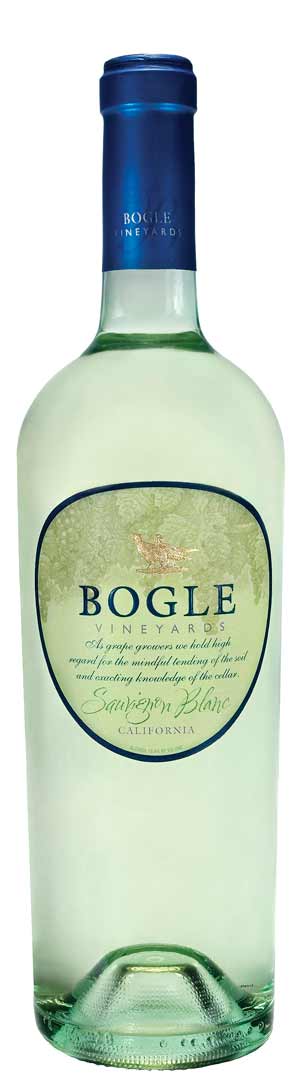
Bargain Wine of the Week: 2009 Bogle Sauvignon Blanc

It's summer, and that means sipping a light, crisp wine on the patio or next to the lake. Sparkling wines, especially the light proseccos and moscatos from Italy, are a sure bet.

But not everybody likes a sparkler, so the next best bet is a Sauvignon Blanc. They are crisp, light, refreshing and they go with just about every appetizer — and they're great just for sipping. If you're a Francophile, buy a Sancerre, which is made from Sauvignon Blanc grapes.

The Sancerres are good, but they are a bit more expensive than American Sauvignon Blancs. Now, every wine shop has a selection of these summer favorites, but many of them are green and grassy and a bit harsh. How do you find one that is a) low-priced; b) guaranteed good; and c) available where you live?

Our sure bet of the summer is Bogle's 2009 Sauvignon Blanc (or any other year for that matter). It can often be had for $7.99, and rarely costs more than $10. Wine Spectator rated this wine with the familiar pheasant on the label at 88 and a Special Value.

Here's a tip: whenever you're watching your pennies and you're looking for a wine that won't break the bank but will taste good, put a Bogle in your shopping cart. If you're guessing at the wine store, you might as well make an intelligent guess. It's close to a sure thing.

Tuesday, May 24, 2011

Try These Wines, But Don't Whine

As every semi-serious wine drinker knows, the place where the grapes are grown has more to do with the quality of the wine than probably anything else — even the grapes. That's why Napa, Bordeaux, Burgundy, Sonoma, Mendoza and Rhone wines are famous.

Part of the place is the land itself, and in a way the tougher the dirt, the better the wine. No pain, no gain. The vines suffer for great wine. The other part of terroir — the place — is the weather. To oversimplify, hot days and cool nights make great wine.

But every place seems to have some local winemaking these days. So, it was not a total surprise on our recent visit to the Black Hills of South Dakota that we found some local wineries. (Our friend Sandy included an Eastern South Dakota wine, Schade, in her post on how to host a wine tasting.)

Finding wineries in the Black Hills is even less surprising when you realize that tourism — think Deadwood, Custer, Mount Rushmore, Indians, gold mines, Dances with Wolves, Crazy Horse, snow skiing and Reptile Gardens — is the lifeblood of the Hills.

But if this land will ever become a great grape-growing region, it will take some more time. The results tend to be sweet and sharp. On the other hand, put two aging Baby Boomers in a car on a long road trip and you can count on many of them pulling into a wine-tasting room with some regularity.

Our first winery billboard outside Hill City, SD, and only a few miles from Mount Rushmore, alerted us to the Stone Faces winery on US Highway 385. Across the road and not far north was the Prairie Berry Winery. Prairie Berry's signature wine is Red Ass Rhubarb.

Prairie Berry is one of 15 wineries in the Black Hills, all producing a total of 300,000 bottles of wine a year. Prairie Berry specializes in fruit and honey wine. The Prairie Berry parking lot was full, and much busier than Stone Faces', because in the land of tourists, a gimmick is worth a pan of gold.

Tuesday, May 17, 2011

Bargain Wine of the Week: Evodia 2009 Old Vines Garnacha

If you see the label pictured next to this write-up, buy it. In fact, buy several. Spanish red wines are a great bargain, and this one stands out. We could not believe we were drinking a $9 bottle of wine. It tasted like $20 easily, and that's not bad for a freshly bottled 2009 vintage.

The International Wine Cellar (we're not sure what that is, to be perfectly honest) gave this wine a 90, so it was on that basis and the cost that we bought four bottles. We wished we had bought a case.

IWC called this wine "sexy" and we agree. This has the taste of berries without being jammy, so it's a great food wine. Deep color, great finish in your mouth, and the aroma of preserves and flowers.

We wish we could find more, but every place we look, it's sold out. If you find any, let us know. We always write about bargains. This one is in the top 5 percent of values.

Sunday, May 1, 2011

Bargain Wine of the Week: Emiliana Eco Balance Carmenere 2009

We've often said that we've never had a bad wine from the Colchagua Valley of Chile. It might be luck, but we think this little valley that produces relatively little wine is always a winner for our Eat Well, Eat Cheap bargain-wine palates.

And we've said once or twice that the long-forgotten, historically significant, little known Carmenere grape produces great wine that others have called "Cabernet Sauvignon in silk pajamas." Sounds good, right?

We hit the jackpot the other day when one of our regular wine eLetters offered Emiliana Vineyard's Eco Balance Carmenere 2009 for $8.99. Two extra bonuses: the price and the fact that if not totally organic, the grapes are farmed with environmentally friendly, integrated-vineyard management practices.

When Ruth served her bridge-playing neighbors this wine the other night, they raved. It's a pretty tight little wine for a $9 bottle. Strawberry smells waft out of the glass. Smokey flavors from the oak barrels land on the tongue, and the velvety tannins of the Carmenere grapes cut the dry edge that gets in the way when you're drinking wine with light hors d'oeuvres.

If you've never tried a Carmenere from Chile, especially one from the Colchagua Valley, pick one up at your wine store. You might discover a new favorite.

Sunday, April 17, 2011

Bargain Wine of the Week: Muscadet

There are certain bargain wine categories that rarely strike out. Aussie Shiraz. Spanish wines, especially Rioja. Chilean Carmenere, especially from the Colchagua Valley. On the other hand, it is hard to find good bargain white wines. And bargain wines from France of any color are as rare as a corkscrew in a dive bar.

Here are two that never seem to miss and they're both from the Loire Valley: Muscadet and Sancerre. The Loire River is in west-central France. It is less well known than Bordeaux, Burgundy and Rhone. But it is relatively inexpensive and it mostly bottles white wines.

Sancerre, which is made from Sauvignon Blanc grapes, is at the inland end of the Loire Valley. Pouilly Fumé is the other appellation that uses Sauvignon Blanc grapes and it is immediately across the river from the town and appellation of Sancerre. Lots of grapefruit and citrus flavors matched by acidity. They are very crisp and delicious white wines — slightly weightier than Muscadets. We buy Sancerre moderately often, but it tends to cost a bit more than Eat Well, Eat Cheap's $10 wine limit.

At the Atlantic Ocean end of the Loire Valley is the town of Nantes, home to the Muscadet appellation. Muscadet is so crisp, it is close to sparkling wine. Muscadet is made from the unknown Melon de Bourgogne grape, which is rarely grown anywhere but in the Muscadet appellation.

When we recently bought a case of wine at EmpireWine.com, we found a Muscadet for $8.95 that Robert Parker had rated 91. You don't see that combination often. It was a bottle of Domain du Haut Bourg 2009 Muscadet Cote de Grandlieu Sur Lie. The Sur Lie is a way of getting more flavor out of white grapes by leaving the wine after fermentation "on the lees," which includes sediment, grape seeds, yeast cells, pulp and stem and skin fragments.

The wine smells of lime, herbs, shrimp and the sea near its vineyards. It is a remarkable value and a great food wine as well as a good porch wine.

Wednesday, April 13, 2011

Bargain Wines of the Week: Flipflop Riesling and Pinot Grigio

Over the years we've developed a fondness for what we call "porch wines"—unpretentious yet tasty whites that have just enough zip and fruit to pair well with hot weather, appetizers, and a screen porch. A good porch wine should dance on the tongue and spare the wallet, so friends can enjoy a few bottles without feeling wasteful.

We've recently discovered a West Coast winery named Flipflop that sells a range of reds and whites for only $7 a bottle. These days, that's a gimmick we can get behind—especially when the wines are this good. After trying Flipflop's 2010 California Pinot Grigio and 2009 Washington Riesling, we can enthusiastically say that these are extraordinary porch wines, especially at this price.

We tried both bottles with a group of friends, to get multiple opinions. Everyone agreed: the Pinot Grigio is very good, much richer than the average Pinot Grigio—closer to a Sauvignon Blanc, in fact; and the deep, fruity Riesling is a knockout. For $7 you cannot go wrong with either bottle. Even if you aren't personally a fan of porch wine, we're pretty sure that once the temperature is climbing and the weekend is at hand, your friends will love these.

Thursday, March 17, 2011

Bargain Wine of the Week: Larrikin 2006 Barossa Valley Shiraz

There are certain consumer products that are bargains right now. Home repair contractors (because there isn't any work and every builder has turned to remodeling to keep the doors open). Clothing at department stores (because it's all made in Asian and nobody's buying much of anything). And wine.

Spain continues to be a stupendous bargain. You can buy good Spanish wines for $10, and great Spanish wines for $20. Chile has been a bargain wine location for many years — and its wines are getting better. And Australian wines can be a great deal, as well.

We found a Barossa Valley Shiraz online for $10 that was not rated, but frankly we're wondering why it was not noticed by someone. The Larrikin 2006 Barossa Valley Shiraz is incredibly well-balanced and full of black and blueberries, with some hints of chocolate and nutmeg. Barossa Valley wines are well thought of and can be expensive. But this one is not costly, and it is worth putting in the shopping cart if you run across it.

Sunday, February 13, 2011

Bargain Wine of the Week: An All-Purpose Cheat Sheet

Eat Well, Eat Cheap gives you all sorts of great wines for less than $10. But then you walk into your local wine store, and you can't find one of our recommendations for wine values at a bargain price. We've tried to give you some universal pointers on brands that are consistent enough to be reliable, but what's a person to do when faced with aisles of anonymous labels?

Wine Enthusiast magazine, arguably the most trusted wine magazine, has come to the rescue. In its new issue (March 2011) it published a reliable wine bargain cheat sheet for the wine store, supermarket or wine discount store.

Wine Enthusiast divided its bargain list first by country. Then it listed the labels that have proved to be the most reliable in its "Best Buy" listings over the years. After each label, it lists the specific regions and varietals that are the pick of the label's bottles — by varietal but not by year.

So, for example, for Chile, it lists eight wineries that consistently produce great bargains. Santa Rita, Concha y Toro, Casa Lapostolle and Los Vascos are among the eight. Under Casa Lapostolle, it lists the winery's Rapel Valley wines, and specifically its Rapel Cabernet Sauvignon and its Carmenére. The winery imports many more wines than those two, but Wine Enthusiast says that those are the two that are consistently good and consistently bargains.

For American wines, it offers separate categories for California, Washington and Oregon.

The magazine offers this invaluable "Cheat Sheet" as a three-page pdf for download, so that you can take it to the store the next time you shop for wine. You might want to leave it in the car for those times when you pop into an unknown and untried store (or even for restaurant wine lists).

Wednesday, February 9, 2011

Bargain Wine of the Week: Valentine Values

So, you're entertaining your sweetie on Valentine's Day. What appropriate wine to serve? Something tasty, low-cost, and with a hint of romance. Here are three that we suggest.

A white wine to go with seafood, or with a pre-dinner salad, or with dessert, or just for sipping and kissing? How about a nice wine for your cupcake?

The Cupcake Vineyards 2010 Sauvignon Blanc from the Marlborough region of New Zealand is a winner, because it is a wine of conviction. That is, it celebrates the uniqueness of its region and the taste it imparts to sauvignon blanc grapes.

We found this wine at Costco for $7.89. It has strong hints of Meyer lemons and Key limes, but it is not sweet. It's perfect for shrimp or pasta with cream sauce and yet will hang in there with your not-too-sweet dessert. (BTW, it's won a bunch of awards. Not bad for less than $8 for your little cupcake.)

Now Valentine's Day is associated with red: red hearts, red pajamas, red sweets. Here's a solid, all-purpose red wine: Ménage a Trois 2009 California Red Wine. Now maybe a name like this will scare the faint of heart, but this wine will win over your partner or partners, no matter how many you have.

As the label says, "surrender to the seduction of dark, rich berry with a hint of pepper, a lush, lingering finish leaving you wishing for more..." Does that not make you think of love?

This wine was also only $7.89 at Costco. A real bargain for the hearty side of Valentine's Day. "Three saucy grapes make up the blend," the winery says. "Zinfandel adds a juicy character. Merlot mellows and Cabernet adds backbone. Forward, spicy and soft, this delicious dalliance makes the perfect trio."

Our third wine is from the Alexander Valley in Sonoma County, California. It's also a spicy red with a hint of romance: Sin Zin Zinfandel. You might have trouble finding it for less than $10, but you shouldn't have trouble finding it for about $12. It's got spice and pepper and will stand up to any food or any rough treatment you might suggest.

Tuesday, February 1, 2011

A Saturday Wine Tasting Party


Note: On Saturday night we went to a wine tasting party held by our friends Chuck and Sandy. They're enthusiastic and curious about wine, but they are by no means snobs. This is why their wine tastings are fun. They gather about ten friends; set out a few disguised bottles and some delicious, absorbent snacks; pass out ratings sheets and pens; and let everybody decide what they like best. Part of the fun, for us, is watching people who are initially shy about their wine-tasting abilities develop confidence in their own palates—before long, everybody's tossing out opinions and asking for second tastes. There's no right or wrong about wines; there's only what you like. A wine tasting party lets you and your friends decide what tastes best to you. 

Here are Sandy's tips for hosting a party:

All you need to host a successful wine tasting party is a couple bottles of wine and friends game to sip and learn. The impetus for our most recent wine tasting was the acquisition of an intriguing red from an unlikely source: a little winery in South Dakota making wines from hybrids of grapes native to northern climes.
 
Since Frontenac, St Croix and Valiant grapes are not widely crushed, we decided the likeliest matchup for our Dakota Red was Merlot, typically a soft medium-bodied red. The four contestants were:

1. Dakota Red NV, Schade Vineyard & Winery, Volga, SD, $10.
2. J. Lohr Paso Robles 2007, chosen because Jerry Lohr grew up in South Dakota before making his wine fortune in CA, $17.
3. Red Diamond Merlot 2008, Washington State, $10.
4. Stonehedge Napa Valley 2007, $12.
 
We invited friends to a blind horizontal tasting, which means the bottles were disguised in brown paper bags and we judged each Merlot on its merits. (A vertical tasting is similar to what you get at a winery, starting with whites and working your way up to reds and dessert wines.) The number of wines is up to you and your friends' patience. Three is probably the minimum; we've had seven, which was too much alcohol and took forever. We usually aim for geographic diversity. If you're tasting Chardonnays, for instance, try them from several countries, or several states, or several different California regions.
 
We used a wine tasting form from Epicurious and asked guests to judge the wines on a scale of 1 to 5 in these categories: color and intensity; aroma; flavor/acidity/sweetness; tannins/body/alcohol; and finish/complexity.
 
None of us are wine experts, but we had a wonderful time guessing at aromas (cinnamon, earthy, pepper, currant, and to our merriment, coconut). Alas, the Schade wine stood out for its sweetness and ranked dead last when the scorecards were tallied.* First place went to the Red Diamond, judged smooth, complex, long finish, and simply "my fave."**
 
We served an assortment of non-spicy hors d'oeurves, hot and cold, and simply warned wine tasters that a radish or really stinky cheese might affect their palate. But as our friend Ruth pointed out, one of the best pairings she ever had was a Sauternes with an extremely ripe American blue cheese.
 
We learned something about wine, without the snobbery or intimidation of a real wine connoisseur on hand. Then again, who's to say we're not connoisseurs? The definition of connoisseur is "an individual with a discriminating taste."
 
For professional tips on a wine tasting party, go to: http://www.epicurious.com/articlesguides/entertaining/partiesevents/winetasting

Notes:
* While it's true that the Schade is a bit sweet for most food combinations, in our opinion [we hasten to add!], it has a nice sherry-like flavor and would make a good aperitif or even dessert wine. 
** Check out the price on the Red Diamond! Best of all, you can find it many places, including Trader Joe's.