Search This Blog

Monday, August 15, 2011

Oh, Yes, Another Recipe That Takes Advantage of Sage

When we posted the five things to do with sage a few posts ago, we forgot one of our favorites: Butternut Squash with Sage Risotto. We posted this old fave of ours during the brutal winter of '09.

But it also works as a great summer or autumn dish, especially when the squash and sage is prolific.

We had an old butternut squash sitting around, and we were clearly going to lose it before long. And our sage plant, after some pruning two weeks ago, is growing like a weed. So we uncorked two bottles of wine made from Syrah and Grenache grapes to let them breathe (in slowly disappearing glasses) and cooked the risotto.

The squash was smaller than called for. The sage ended up being twice as much as in the recipe. But the dish, accompanied by sliced tomatoes, was divine.

What a pleasant mid-summer treat.

Sunday, August 14, 2011

Bargain Wine of the Week: Domaine de Dionysos La Deveze Côtes du Rhône Villages 2009

Before any major exertion you should train a bit, so that's what we're doing in preparation for our trip to the Rhône and Languedoc in southern France. 

We've stocked up on $10 bargain wines from the area to form a base for our tastings while we eat and drink our way around the northwestern bank of the Mediterranean. We've already set up two winery visits — to two vineyards that we've reviewed.

In our effort to taste and determine the differences in Rhone wines, we opened a Côtes du Rhône that we bought online for $11, just a dollar over our $10 limit (thinking that in France it will cost $10 or less).

The Domaine de Dionysos La Deveze Côtes du Rhône Villages 2009 was rated 90 by Wine Spectator, so it was pretty much assured that it wouldn't be a loser. 


Indeed, this dark mix of Grenache, Syrah, Cinsault and Carignane was a great all-around buy. It sipped well before dinner and accompanied our summer meal of tomatoes and pasta extremely well. It smells and tastes of berries, with just a hint of flint to keep it from being too jammy. 

Saturday, August 13, 2011

A Great Column on Mindful Budget Eating

Felisa Rogers has been writing a series of wonderful columns for Salon on eating cheap—but they're about much more than eating on a (very) tight budget. She explores the joys of foraging, of refusing to waste, of refusing to give in to financial despair, of appreciating. Her column today is a beauty.

We like Rogers's writing because it exemplifies our favorite quote from M. F. K. Fisher:

“ . . . there is a basic thoughtfulness, a searching for the kernel in the nut, the bite in honest bread, the slow savor in a baked wished-for apple. It is this thoughtfulness that we must hold to, in peace or war, if we may continue to eat to live.” 


Tuesday, August 9, 2011

Five Tasty Ways to Use Sage in the Summertime

Sage is a wonderful but weird herb—wonderful because its deep, resinous flavor complements pork, chicken, potatoes, and squash so well, but weird because it flourishes in the summertime, when we tend to eat dishes that call for greener, more delicate herbs, like cilantro and basil. But you don't need to limit your sage use to Thanksgiving.

Here are five delicious ways to use sage in the summertime.

1. Sage and walnut pesto on pork or potatoes. This hearty pesto even works on the grill!

2. Crunchy fried sage leaves to garnish pasta or risotto or eat by themselves as a cocktail snack.

3. Roast potatoes with sage. Line a pan with whole sage leaves, then cover them with halved potatoes. The result: crunchy, creamy bliss.

4. White beans with sage and garlic. There's nothing easier than boiling some white beans with sage, garlic, and a little olive oil. You can eat them hot or cool them to use in a summer salad.

5. Sage vinaigrette. Add some chopped sage to a mustard vinaigrette for a tangy dressing on grilled or steamed vegetables.

Sage is a very easy plant to grow; it's disease-resistant and likes dry conditions. Depending on your climate, some plants will "winter over," providing years of tasty service.


Wednesday, August 3, 2011

Best Bought Veggie Burger Ever!

As you know—indeed, as you are probably tired of hearing by now—we avoid processed food whenever possible, for reasons of flavor, cost, and health. But every once in a while we discover a processed product that is so wonderful—that's so much better than we can make ourselves—that we have to blab about it. Vegenaise is one. Morningstar Farms Chipotle Black Bean Burgers are another.

There are a few inherent problems with veggie burgers. Homemade ones can taste great, but they tend to be too soft to grill, so they can't provide the full burger experience. Processed burgers, on the other hand, too often are dry, bready, and tasteless.

But Morningstar Farms' chipotle-spiked black bean burgers grill beautifully, developing  a "meaty" crust that could satisfy the most bloodthirsty carnivore. They're firm, flavorful, and, at a quarter pound apiece, satisfyingly large. They are heaven.

We discovered them at Costco, promptly finished a box, then went back for more, with some trepidation; Costco has a habit of dropping products that don't quickly catch on. Up and down the frozen aisle we prowled, worried that we'd never see the burgers again at a Costco price. Nothing . . . until we turned a corner and saw that Costco had devoted the entire "end cap" of its freezer section to a gigantic display of the burgers! As Costco is hardly a vegetarian paradise, we have to assume that this product is catching on with everybody.

Try them! You may never go back to hamburgers.

Tuesday, August 2, 2011

Burning Man ... in Spirit, Anyway

August is here, and Burning Man is almost upon us. Admittedly, we won't be there—broiling in the Nevada desert is pretty much the last thing we want to do, even for the sake of art, community, and countercultural frisson.

Still, we're glad that other people go to Burning Man, and the website is a joy to explore. We particularly like the section on how to cook well for yourself in a place with no piped-in water or fuel. The tips and recipes would work just as well for camping, and some of them would be great even for air-conditioned suburbanites like us, looking for some easy, delicious, healthy food as the hot summer unfurls . . .

Saturday, July 30, 2011

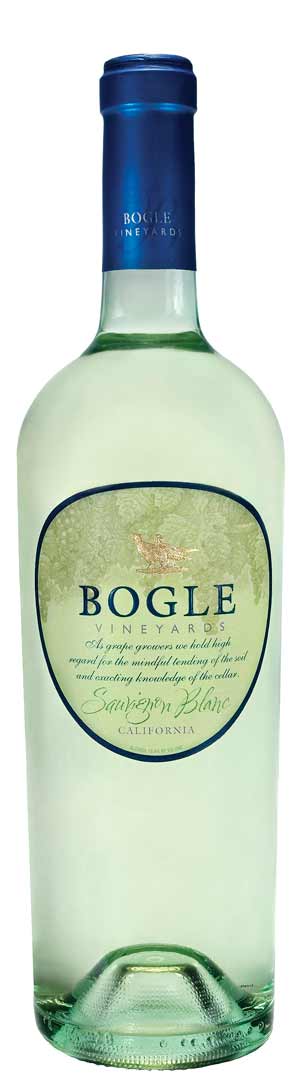
Bargain Wine of the Week: 2009 Bogle Sauvignon Blanc

It's summer, and that means sipping a light, crisp wine on the patio or next to the lake. Sparkling wines, especially the light proseccos and moscatos from Italy, are a sure bet.

But not everybody likes a sparkler, so the next best bet is a Sauvignon Blanc. They are crisp, light, refreshing and they go with just about every appetizer — and they're great just for sipping. If you're a Francophile, buy a Sancerre, which is made from Sauvignon Blanc grapes.

The Sancerres are good, but they are a bit more expensive than American Sauvignon Blancs. Now, every wine shop has a selection of these summer favorites, but many of them are green and grassy and a bit harsh. How do you find one that is a) low-priced; b) guaranteed good; and c) available where you live?

Our sure bet of the summer is Bogle's 2009 Sauvignon Blanc (or any other year for that matter). It can often be had for $7.99, and rarely costs more than $10. Wine Spectator rated this wine with the familiar pheasant on the label at 88 and a Special Value.

Here's a tip: whenever you're watching your pennies and you're looking for a wine that won't break the bank but will taste good, put a Bogle in your shopping cart. If you're guessing at the wine store, you might as well make an intelligent guess. It's close to a sure thing.

Tuesday, July 26, 2011

More Hot-Weather Relief: Mango Salad

Though the humidity has backed off a bit, it's still late July in Northern Virginia, which means we're disinclined to turn on the stove or the grill. The solution: light, refreshing salads that make use of all the great produce that's available. All you need is a good knife and, if you're lazy like us, a food processor that can quickly handle the tedious job of shredding.

The other night we shredded a green mango and made a salad that was tart, sweet, a little hot, and completely delicious. This recipe makes two very decent portions; if you want to feed more people, it's easily doubled or even tripled.

Green Mango Salad

1 green mango (if all you have is a firm orange mango, go ahead and use that)
1/2 cup chopped cilantro
1/3 cup chopped basil
2 scallions, minced
1/3 cup roasted chopped peanuts

Dressing:
2 T. fish sauce
3 T. lime juice
4 t. brown sugar
1 t. chili garlic paste

1. Shred the mango, either using a grater or (much quicker) the shredding blade on a food processor.

2. Mix with the cilantro, basil, scallions, and peanuts.

3. Pour dressing over all, and serve immediately.

Serves two.

Friday, July 22, 2011

Hot-Weather Relief

Here in Northern Virginia it is 103 degrees in the shade, with a heat index estimated at about 115 and no relief expected for days to come. Needless to say, we won't be cooking for a while; even outdoor grilling seems too much heat to bear. Instead, we'll be relying on some hot-weather favorites that require very little effort and no stove.

First, drinks. This is perfect weather for a Liberator; if that's too strong for your taste, how about some nice sparkly Prosecco? Pour yourself a glass of something cool, put on some good music, pull out your knives, and get to work on a quick, light, delicious meal.

A salad composed of cool ribbons of zucchini dressed with lemon, mint, and Parmesan would be perfect on a day like this. So would a slaw of raw beets and carrots bathed in tangy Dijon. This watermelon salad with mint and feta cheese can be either a first course or a light main course. And this bean sprout salad mixes bold flavors with light veggies.

Want something more substantial? How about a crunchy Indian salad?

For dessert, all you need is some cold fruit, and maybe a little bit more Prosecco.

Tuesday, July 19, 2011

You Can Make Tapas at Home

First, apologies for the long drought of posts. We were out of town and ran into Internet problems that, like all Internet problems, were both complicated and too boring to explain.

Now that we're back, we can write a post we've been meaning to write since Ruth's birthday back in June.

We celebrated with a trip to Jaleo, a tapas restaurant run by José Andrés that has gotten great reviews. As we don't eat out that often, we tend to be extra-critical of bad food and extra-delighted by good food; if the service and atmosphere also deserve high marks, we're disproportionately thrilled. This was one of those meals. Everything was great, from the opening dish of olives with tiny cubes of marinated Manchego cheese to the final bowl of olive oil ice cream and grapefruit sorbet. Best of all, we figured that we could reproduce our favorite dishes back home.

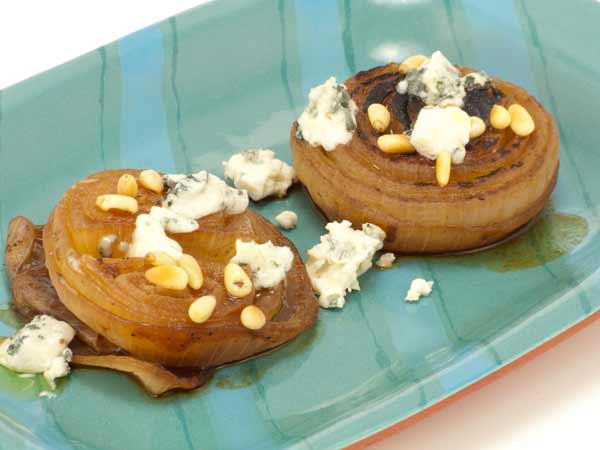
Usually, it takes at least a few tries to successfully approximate a restaurant dish, but the first one we tried—poached onions with blue cheese and pine nuts—came out great. We were astonished by how easy it was.

Because this can be made ahead of time and either warmed up or served at room temperature, this would make an excellent first course. We plan to use it as part of a homemade tapas lineup (our next post, also poached from Jaleo: stuffed peppers with tapenade).

You'll notice that one of the onions in the photo looks charred. That's because we experimented with grilling half of the onions in the recipe, wondering if that would make a difference. It did seem to add flavor, though the nongrilled onions tasted great too.

Onions with Blue Cheese and Pine Nuts

Two fat onions
6 cups vegetable or chicken stock
Salt and pepper to taste
1/4 cup crumbled blue cheese
1/4 cup toasted pine nuts
2 T. olive oil

1. Peel the onions and halve them through their centers, leaving their stem ends intact so they don't fall apart during the poaching.

2. Place them cut-side down in a deep skillet and pour the stock over them. Bring it to a boil, then reduce to a low simmer. Let the onions simmer until the stock is mostly evaporated and they are tender all the way through—depending on the size of the onions, this can take as a long as an hour.

3. While the onions poach, toast the pine nuts and crumble the blue cheese.

4. When the onions are tender, remove them to a plate, sprinkle them with pine nuts and blue cheese, and drizzle them lightly with olive oil.

Serves four.

Wednesday, June 29, 2011

Hot-Weather Treat: No-Fat Chocolate-Cherry Shake

Here in Virginia summer has descended with its usual wallop—scorching temperatures and high humidity without even the occasional thunderstorm to cool things off. Fortunately, we've come up with a recipe for a cool summer treat.

Our inspiration came from Dr. Joel Fuhrman's book Eat to Live, which advocates a diet high in fruits and vegetables. Though some of his recommendations are a bit extreme for the likes of us—we're not sure a longer life would be worth living if it did not include olive oil—we're all in favor of fruits and vegetables, so we've been looking over his recipes with interest. One, for a chocolate spinach smoothie, gave us the idea for this chocolate-cherry shake, which we've been happily slurping for weeks.

Although this calls for quite a bit of spinach—a couple of fat handfuls—you'll never taste or see it in the finished product. You'll just have the invisible satisfaction of knowing that this cold, chocolatey deliciousness packs a lot of nutrition.

Chocolate-Cherry Shake

3/4 cup coconut water (you can also use any kind of milk)
Heaping 1/2 cup frozen pitted cherries
2 T. cocoa powder
2 dates, pitted
2 ounces baby spinach (about two good-size handfuls)
1/2 cup ice cubes

Place all ingredients in a blender, and let it rip. Makes two decent portions or one monster portion.

Thursday, June 23, 2011

It's Summer: Greens, Greens and More Greens


Even if you don't receive a CSA box full of greens every week like we do, you probably either grow them yourself or you find your supermarket produce section sprouting some interesting leafy greens this time of year.

They're cheap. They're really good for you. And they're versatile if you use your imagination: in salads, steamed, cut up in soup or roasted into appetizer chips.

In last Sunday's New York Times Magazine, Mark Bittman published a matrix of greens by type and offered dozens of ways to deal with them. Here's the gist of his article and matrix.

Romaine is fine. But dandelion, tender lettuces, chard and arugula (real arugula, not the “baby” kind they sell in most supermarkets) are all ubiquitous this time of year, and they can be as flavorful as the juiciest tomato. You can make a different salad every day for weeks without repeating yourself.
Whatever strange green you find in your kitchen this time of year, the article suggests a tasty way to eat it. 

Monday, June 20, 2011

Good Fast Food: White Beans with Greens and Sausage

How versatile is this dish? For one thing, it can be served cold as a salad* or hot as a stew. Room temperature also would work just fine. The ingredients are nearly infinitely adaptable, depending on what you crave or happen to have on hand.

Our last batch was inspired by some leftover greens from the CSA box. We still haven't identified them—they resembled broccoli raab sans blossoms—but after we sautéed them we decided that they were a bit too chewy and strong-tasting to eat on their own, even with a splash of fruity fig vinegar. Though we were definitely not crazy about them, we're committed to using every molecule of our precious (and not inexpensive) CSA produce, so tossing them was out of the question.

We remembered that greens go well with white beans, so we cooked a pound of Great Northerns with plenty of crushed garlic and sage. When the beans were done, we removed most of the cooking liquid (saving it for soup) and added the mystery greens (cut in smaller strips to mitigate the bitterness), a can of fire-roasted tomatoes, four crumbled veggie sausages, a drizzle of olive oil, salt, and pepper.

(Though we cooked our beans from scratch, you could use a few cans of rinsed white beans for a nice fast meal.)

Our impromptu stew was wonderful; the bitter greens played well with the mild beans and salty sausage. But any kind of greens would do—chard, kale, collards—and roasted red peppers would have made an excellent substitute for the tomatoes. Plain diced tomatoes or halved grape tomatoes also would have worked. Chunks of Italian sausage (or Tofurky!) would have been delicious.

The lesson: Don't give up on something you've cooked, no matter how much it has disappointed you—chances are that with a little tweaking, it can be part of another dish that you'll like much better.

If you opt for a cold salad, remove all of the bean cooking liquid and add a little more olive oil.

Thursday, June 16, 2011

Bloody Mary Salad Dressing: Apéritif without the Alcohol

You never know where you are going to get inspiration for a recipe you love. On our recent visit to South Dakota — not typically a land of culinary distinction — we found two recipes we now love.

One was the result of a visit to a Vietnamese-run, Chinese-Vietnamese restaurant in Rapid City where the chef-owner showed us how she made the delicious sautéed tofu (recipe to come) we enjoyed.

The other was the Bloody Mary dressing served on our green salad at Jake's in historic Deadwood. Jake's is right on main street but is hard to find because the sign is small — but the reward is huge. We had a great meal. And, if this sort of thing helps you go there, it is owned by Kevin Costner, who fell in love with Deadwood while filming "Dances With Wolves."

Our green salad was bathed lightly in a Bloody Mary dressing that awakened our taste buds.
With a little experience making Bloody Mary's, a little imagination and some vague help from the waiter, we've reconstructed the dressing:

Bloody Mary Salad Dressing

4 Tablespoons juice from a can of diced or whole tomatoes
2 Tablespoons olive oil
1 Tablespoon red wine or sherry vinegar
2 teaspoons horseradish
1/4 teaspoon hot sauce
1 teaspoons fresh squeezed lemon juice
2 teaspoons tomato paste
pinch celery salt
Salt and pepper, to taste

Shake the above ingredients in a small jar or container.
In a bowl, mix greens with a little feta (optional) and halved cherry tomatoes (optional), then dress with some of the Bloody Mary dressing.

And, of course, if you want some alcohol with your salad, this dressing goes nicely with a Sauvignon Blanc or a crisp Chardonnay.

Refrigerate the leftover dressing and use again the next day or within a week.

Tuesday, June 7, 2011

A Box of Great Meals

Last night we managed to polish off our first half-share box from our CSA. Here's how we did it:

Asparagus Risotto

Crispy Noodle Cake with Kale and Mushrooms (we included our single CSA garlic scape, minced)

Grilled Spring Onions

Green Salad with Bloody Mary Dressing

Strawberries for breakfast

As we move into the summer, it will be difficult, if not impossible, to finish a boxful of vegetables and fruit in a week, but we promise to give it our best shot.

Monday, June 6, 2011

Food Store Shopping Binge Receipt: $65 and More Veggies Than You Can Carry

Here's the receipt from a recent trip to the store where we buy our produce. The booty was almost too much to carry, but it will feed us for some time.

The store's produce is typically inexpensive (if they can do it, why can't the big supermarkets?). Some items are not cheap: apples $2.79/lb.; grape tomatoes $2/pint. But broccoli crown was $1; cilantro $.50; strawberries $1/1.5 pint; limes $1/7.

Sunday, June 5, 2011

Broccoli "Rice" Side Dish

Broccoli has its detractors, but we've always liked this year-round vegetable. The worst we could say — and we often did — was that it is BOH-ring.

Broccoli crowns were ridiculously cheap the other day at our local market, so we loaded up with a couple, and then checked our ever-growing shelf of cookbooks for a different way to love its green goodness. We ran across something called Broccoli "Rice," which wasn't rice at all.

The broccoli is minced into small pieces the size of a grain of rice, and the preparation gives broccoli a very fresh taste and creative presentation. It makes this winter vegetable into a summer surprise. And who would have ever thought of putting mint in a broccoli side dish? Brilliant.

The recipe is the brainchild of Eric Gower, author of "The Breakaway Cook." Serve this side next to any meat or protein, or under it as we did last night, as shown in the photo above.

Broccoli "Rice"

1 Tablespoon unsalted butter
1 Tablespoon olive oil
1 large onion, minced
Kosher salt and fresh-ground black pepper
1 medium head of broccoli, minced to rice size

Dressing
2 Tablespoons Greek or plain yogurt
1 Tablespoon citrus juice (we used lime)
2 Tablespoons minced fresh mint

Melt the butter and olive oil in a large pan or wok over medium heat.
Add the onion and salt and pepper liberally.
Cook, stirring once in a while, until softened but not browned.
Add the broccoli and continue to cook for about 10 minutes, until the vegetable is cooked through.
While it's cooking, blend the dressing ingredients, and add to the broccoli when it is done. Cook for another couple of minutes to blend flavors. Test for seasoning.

Serve under meat, fish or tofu and with a fresh, crisp white such as sauvignon blanc, viognier, or light chardonnay.

We served it with scallion-coated tofu and grilled spring onions from the CSA box.

Saturday, June 4, 2011

Asparagus Risotto: Using the CSA Box Veggies

With the arrival of the weekend one day after our first CSA box of veggies, we decided to open a swell bottle of Zinfandel and a bottle of Sauvignon Blanc and make something delicious with our first bounty of the season.

We decided to alter one of our favorite risotto recipes to take advantage of what we had. Instead of the green beans the recipe called for, we subbed in our large bunch of asparagus, which we steamed lightly to soften it up and cook it just a bit. Then we cut it into 3/4-inch pieces, saving the cute tops for garnish.

People avoid risotto because it requires more or less constant attention for 20 minutes, but it's really pretty easy. And we've never made a risotto that we didn't love.

The Recipe is from Moosewood Restaurant Cooks at Home. It's actually pretty low-fat and healthy.

1 Tablespoon olive oil
5 cups broth
1.5 cups arborio rice
1 bunch asparagus, lightly steamed and cut into 3/4-inch pieces
1 small onion
1 tomato diced
1/3 cup grated parmesan
1/3 cup pesto (optional), either basil- or cilantro-based
salt

Start with a Tablespoon of Olive Oil in a large saucepan or dutch oven on medium high. Add a chopped small onion until it softens (not browned). Add a cup and a half of rinsed arborio rice and stir it to coat the rice with the oil.

While you're getting ready to cook, heat 5 cups of broth (chicken or veggie stock will do) to a simmer in another saucepan.

After the rice is coated, add a cup of the hot broth and stir until all of the liquid is pretty much gone. Add another cup and stir until almost gone. Add a third cup and stir. When the broth from the third cup is almost gone, add the asparagus, which has been steamed and cut.

Add the last two cups of stock, one at a time, or even half a cup at a time, stirring to absorb the liquid each time. This slow cooking will cook the rice. Test to see that the rice is tender but still a bit al dente. Add salt to taste.

Add the tomato, parmesan and optional pesto. For pesto we used our fave cilantro pesto because we had some on hand, and it added a marvelous tang. (The original recipe calls for 12 cup parmesan, but we lowered the amount to 1/3 cups and it was great.)

We served it with steamed swiss chard with a splash of fig-infused vinegar. The sharp chard was a nice balance to the almost sweet and tangy risotto. They tasted great with both the red Zinfandel and the white Sauvignon Blanc.

Friday, June 3, 2011

New CSA Season: A Box of Veggies a Week Through the Summer and Fall


We finally found a local farm that sponsors a Community Supported Agriculture (CSA) program — after two years of being without the basket of local goodness.

The CSA farm is in a town fairly far away (considering the horrendous traffic), but has a pickup arrangement with a local farmers market where we can pick up our box.

The first week's box is always small and predictable, but we consider it a warmup for the mid- and late-summer boxes that are a challenge to eat in one week. In fact that's the biggest CSA hurdle: eating everything you are given.

This week the box contained a large head of red leaf lettuce, a small basil seedling for planting, a bundle of asparagus, a box of strawberries, a bunch of kale and several spring onions. All grown locally and tasting great because they are fresh picked.

Wednesday, May 25, 2011

Interpretation Needed for Plum Chicken Sculpture

We saw this "sculpture" in a Vietnamese/Chinese restaurant the other day and quickly decided that we were unable to interpret it.

The saying underneath, "Plum Chicken ... More Than a State of Mind" is probably simple enough: The Plum Chicken on the menu is so wonderful that it will take your taste buds and your brain to places they've never been. Or something along those lines.

But then the sculpture above the words left us wondering. A flying rubber chicken tied with string to the finger of a hand — all encased in a wire screen dome.

Hmmmmmm?

If any of you can offer an explanation, please add a comment.

Tuesday, May 24, 2011

Try These Wines, But Don't Whine

As every semi-serious wine drinker knows, the place where the grapes are grown has more to do with the quality of the wine than probably anything else — even the grapes. That's why Napa, Bordeaux, Burgundy, Sonoma, Mendoza and Rhone wines are famous.

Part of the place is the land itself, and in a way the tougher the dirt, the better the wine. No pain, no gain. The vines suffer for great wine. The other part of terroir — the place — is the weather. To oversimplify, hot days and cool nights make great wine.

But every place seems to have some local winemaking these days. So, it was not a total surprise on our recent visit to the Black Hills of South Dakota that we found some local wineries. (Our friend Sandy included an Eastern South Dakota wine, Schade, in her post on how to host a wine tasting.)

Finding wineries in the Black Hills is even less surprising when you realize that tourism — think Deadwood, Custer, Mount Rushmore, Indians, gold mines, Dances with Wolves, Crazy Horse, snow skiing and Reptile Gardens — is the lifeblood of the Hills.

But if this land will ever become a great grape-growing region, it will take some more time. The results tend to be sweet and sharp. On the other hand, put two aging Baby Boomers in a car on a long road trip and you can count on many of them pulling into a wine-tasting room with some regularity.

Our first winery billboard outside Hill City, SD, and only a few miles from Mount Rushmore, alerted us to the Stone Faces winery on US Highway 385. Across the road and not far north was the Prairie Berry Winery. Prairie Berry's signature wine is Red Ass Rhubarb.

Prairie Berry is one of 15 wineries in the Black Hills, all producing a total of 300,000 bottles of wine a year. Prairie Berry specializes in fruit and honey wine. The Prairie Berry parking lot was full, and much busier than Stone Faces', because in the land of tourists, a gimmick is worth a pan of gold.

Omelet in a Bag: Great for Large Groups

Depending on how seriously you take your omelet-making, it is either fairly easy or really difficult. But there's one thing about omelets that is always difficult: making them for a lot of people so that everyone can eat at the same time.

On our recent trip to a wedding in South Dakota, all of the family members of the bride and groom were invited to breakfast the following morning at the couple's newly expanded house. On the menu? Omelet-in-a-bag.

Some were skeptical, but we were all game, because it meant that no chef had to stand over a hot burner and we could all sit down to eat at one time — all 12 of us. And every omelet is unique and made-to-order.

It starts with a one-quart freezer bag, like a Zip-Loc. (They have to be freezer bags; the lighter sandwich bags won't hold up.) Break two or three eggs into the bag and squish them around until the yolks and whites are mixed. Then have a table full of omelet ingredients such as chopped mushrooms, tomatoes, peppers and onions — along with shredded cheese and cooked ground sausage and chopped ham.

Each diner selects the specific ingredients and exact amounts of what they want in their omelet. Merely throw it in the bag for the omelet of your choice.

Next comes a pot or two of boiling water. The pot should be big, like a stock pot, and the water should be boiling rapidly. You just drop in the bags and wait a short while for breakfast to be served.

Here's the part you have to remember: No more than six bags in each pot at a time; and leave them in the boiling water for 13 minutes. When the timer alerts you, pull each one out with a long set of tongs — or use your fingers if you have construction hands.

(One of our bags opened up during the cooking, but the omelet stayed inside and was perfectly delicious.)

We rolled the omelets out of the bag onto a plate, where they looked almost as good as any we would have made in a skillet. Then we each added salsa and fruit to our plates and gathered around the table at the same time for a fine post-wedding breakfast.

Sunday, May 22, 2011

Is It Cheaper to Be a Meat Eater or a Vegetarian?

We think it's probably cheaper to be a vegetarian—depending, of course, on what and where you eat. This site lays out one scenario and concludes that vegans eat most cheaply, but this post raises valid questions about how they calculated it. In any case, it's worth checking out and thinking about.

Friday, May 20, 2011

EWEC Named One of Best Cheap-Eats Blogs!

We are delighted to report that Eat Well, Eat Cheap has been named one of the 50 Best Cheap Eats Blogs by the Culinary Arts Degree website. Their list includes a lot of great-sounding blogs we didn't know, so we'll have fun exploring them, and maybe picking up some good ideas!

Tuesday, May 17, 2011

Bargain Wine of the Week: Evodia 2009 Old Vines Garnacha

If you see the label pictured next to this write-up, buy it. In fact, buy several. Spanish red wines are a great bargain, and this one stands out. We could not believe we were drinking a $9 bottle of wine. It tasted like $20 easily, and that's not bad for a freshly bottled 2009 vintage.

The International Wine Cellar (we're not sure what that is, to be perfectly honest) gave this wine a 90, so it was on that basis and the cost that we bought four bottles. We wished we had bought a case.

IWC called this wine "sexy" and we agree. This has the taste of berries without being jammy, so it's a great food wine. Deep color, great finish in your mouth, and the aroma of preserves and flowers.

We wish we could find more, but every place we look, it's sold out. If you find any, let us know. We always write about bargains. This one is in the top 5 percent of values.

Buying in Bulk

As you know, we're devoted Costco shoppers, to the point that we can't imagine anyone not being a Costco shopper. But often people will say to us, "There are only two of us, so it doesn't make sense to buy in bulk." That's probably true for things like gallons of milk and crates of mangoes, but some things last nearly forever, so why not buy them in bulk, provided you have the storage space? Not only do you save money, but you have a ready supply of cooking ingredients.

Rice falls into this category; we buy it by the 20-pound bag. Also, cinnamon, which we use for granola and muffins; Costco sells an 11-ounce jar that lasts a good long while. Ditto for peppercorns and canned tomatoes.

And capers. Now, to some people, it may seem ridiculous to buy capers by the quart; they only use them a tablespoon at a time, and not all that often. And we don't use capers all that often—say, a few tablespoons a month. But it's great to know that they are always there when we need them, pickled in brine, waiting to be turned into sauces and tapenade.

A while back, after emptying a quart jar of capers that we'd owned for years, we bought an eight-ounce jar that seemed to disappear overnight. That just seemed wrong, so we went back to Costco and bought another megajar of capers. Now we're set
. . .

Wednesday, May 11, 2011

Light Cilantro Pesto

We cooked adzuki beans for the first time the other day, with no idea what we would do with them. They look like small red beans and have a flavor partway between a red and a black bean. Anyway, we ended up with about four cups of them, so we decided to eat some of them last night for dinner . . . but how?

We could have thrown them into a soup, paired them with rice and salsa, or used them as part of a salad. But in the spirit of trying new things, we turned to our beloved Mark Bittman's cookbook How to Cook Everything Vegetarian. His recipe for Bean Croquettes caught our eye, partly because he promised it was fast and easy. (We realize that "bean croquettes" sounds like something served in a bad hippie café, but we always trust Mark Bittman.)

Spiked with onion, barbecue sauce, and chipotle, the croquettes tasted great, but Bittman suggested pairing them with a light cilantro pesto. Because he provided the pesto recipe and because we had a bunch of cilantro and because we were still savoring the spirit of adventure, we tried it. It was wonderful—light as promised, with a shot of lime, it provided a tangy contrast that elevated the adzuki croquettes to another level.

Often we buy a bunch of cilantro, use a couple of tablespoons, and lose the rest—it's pretty perishable stuff. This sauce is a good, easy way to use it up and grab yourself some quick, easy flavor while you're at it.

Light Cilantro Pesto

1 bunch cilantro, washed but not stemmed
1 clove garlic
1 1/2 T. peanut oil
1/4 t. salt (you might want more, but start with this)
about 3/4 T. lime juice (again, you might want more)

Place all ingredients in a blender or food processor, whir until combined.

This would be excellent on grilled vegetables or fish.

Sunday, May 1, 2011

Cinco de Mayo Feast

If you are scratching your head for something to make in celebration of Cinco de Mayo, We've got a few suggestions. Viva la Mexico!

(By the way, May 5 is not Mexican Independence Day. It was the day an outnumbered Mexican army defeated a double-sized French army, and it came 40 years after the revolution.)

For hors d'oeuvres, make your own chips and salsa. Make the Baked Tortilla Chips from those partial packages of corn tortillas that are languishing in your fridge. And no salsa is more fresh tasting than the kind you make yourself. We suggest Chuck's Surprising Salsa. Also consider a meatier appetizer, Fried Cheese or Queso Fresco.  

For a pre-entre warmup, make some Red Mole Black Bean Soup, or if you're loose enough to consider celebrating New Mexico on Cinco de Mayo, make one of our favorite soups, New Mexico Green Chile.

If you are feeding an army, as the Mexican government was doing on the original Cinco de Mayo, try RoAnn's Chicken EnchiladasMexican Rice and Beans, or Salsa Casserole.   

If it's more an intimate dinner you're preparing, you can't beat our own Fish in Adobo Sauce, modeled on a great dish Tim had in Mexico.

If you want to play really loose with the history, stretch Cinco de Mayo all the way to Argentina and make Chimichurri, a hearty crowd-pleaser.

And with all of the above, it wouldn't be Cinco de Mayo without Cornbread and your favorite beer. You know that we lean toward wine here at Eat Well, Eat Cheap, but we haven't found a Mexican wine that we can recommend. In Mexico, most of the restaurants serve wine wine from Chile, which we recommend often here. But for our money, with the spicy cuisine of Mexico, you can't beat a great white Sauvignon Blanc or, if you prefer red, a snappy Zinfandel.

Happy Cinco de Mayo from the Mexican food fans at Eat Well, Eat Cheap.  

Bargain Wine of the Week: Emiliana Eco Balance Carmenere 2009

We've often said that we've never had a bad wine from the Colchagua Valley of Chile. It might be luck, but we think this little valley that produces relatively little wine is always a winner for our Eat Well, Eat Cheap bargain-wine palates.

And we've said once or twice that the long-forgotten, historically significant, little known Carmenere grape produces great wine that others have called "Cabernet Sauvignon in silk pajamas." Sounds good, right?

We hit the jackpot the other day when one of our regular wine eLetters offered Emiliana Vineyard's Eco Balance Carmenere 2009 for $8.99. Two extra bonuses: the price and the fact that if not totally organic, the grapes are farmed with environmentally friendly, integrated-vineyard management practices.

When Ruth served her bridge-playing neighbors this wine the other night, they raved. It's a pretty tight little wine for a $9 bottle. Strawberry smells waft out of the glass. Smokey flavors from the oak barrels land on the tongue, and the velvety tannins of the Carmenere grapes cut the dry edge that gets in the way when you're drinking wine with light hors d'oeuvres.

If you've never tried a Carmenere from Chile, especially one from the Colchagua Valley, pick one up at your wine store. You might discover a new favorite.

Saturday, April 30, 2011

Broccoli Pesto: Low-Fat, Vegan, Extremely Tasty

We love pesto. On pasta, or on pizza. However, there are two potential problems with it. 1. Basil is not available most of the year. 2. If you're watching your cholesterol, the wonderful parmesan edge in traditional pesto is no-no if consumed too often.

We came across this broccoli pesto recipe in a Vegetarian Times eLetter the other day and altered it just a bit. We expected blah pesto and were more than pleasantly surprised by how good it was. The bonus is that it's also vegan, meaning no dairy, and low-fat — without tasting like it's food penance.

Broccoli Pesto on Pasta
3/4 cup toasted walnuts (toast them in a hot skillet, flipping almost constantly so they don't burn). Save a few for garnish.
(The VegTimes recipe calls for blanched hazelnuts, but we didn't have any on hand.)
2 cups broccoli florets (1 small bunch was about right)
1-1/2 cup loosely packed parsley leaves (we chopped the stems off a supermarket bunch)
1/3 cup olive oil
1/2 cup mint leaves (fresh from our yard because you can't kill this plant)
4 tsp lemon juice (1 juicy lemon or 1-1/2 regular lemons)
1-1/2 tsp grated lemon zest (about 1 lemon's worth)
1-1/2 tsp capers (VT says rinsed and drained and optional, but we threw them in from the jar)
3 large garlic cloves (VT said 5, but 3 was about right for us; 5 for real garlic LOVERS)
1 tsp salt
1 lb bowtie or ziti or other pasta (VT called for 12 oz. but we found 1 lb just right)

1. Toast the nuts 3-5 miutes in a skillet or until golden brown. Chop very coarsely and set aside.
2. Boil a large pot of water. Blanch/cook broccoli in boiling water until tender, maybe 3 minutes. Remove with slotted spoon, rinse with cold water, set aside.
3. In a food processor, pulse nuts, broccoli, parsley, oil, mint, lemon juice, lemon zest, capers, garlic and salt. Use a little cooking water if too thick. Season to taste with salt and pepper.
4. Cook pasta. Reserve cooking water.
5. Toss pasta with pesto. Add small amounts (1/4 cup at a time) of cooking water if too thick. (It should be thick, but it should coat the pasta.) Garnish with a few nuts. Drizzle with a little olive oil.

6. Open a bottle of crisp, rich white wine or a red Zinfandel — something that can stand up to garlicky, rich, strong green sauce — and enjoy as a main dish or as a filling side.

Friday, April 29, 2011

Mango "Hollandaise" Sauce

Asparagus is plentiful right now, and although we love this beautiful vegetable roasted, steamed, stir-fried, or merely barely blanched, sometimes we want a little bit . . . more. So the other day we experimented with a low-fat substitute for Hollandaise sauce, and in our opinion, we got it just right on the first try (very rare!).

This sauce, which tastes surprisingly mustardy despite its lack of mustard, worked great on steamed asparagus and as a light salad dressing; there are doubtless many other ways to use it. With only two tablespoons of olive oil, it's delivers maximum flavor for minimal fat.

Mango Sauce

1 small mango (the Champagne variety would be perfect; you could also use half of a big mango or simply double the other ingredients and use the whole big thing)
1 small shallot (either a small Asian shallot or one section of the bigger American variety)
Juice of 1/2 lemon
2 T. olive oil
Pinch salt
Grinding of black pepper

Place all of the ingredients in a blender and whiz until smooth and emulsified. Then use liberally on whatever you like.

Sunday, April 17, 2011

Bargain Wine of the Week: Muscadet

There are certain bargain wine categories that rarely strike out. Aussie Shiraz. Spanish wines, especially Rioja. Chilean Carmenere, especially from the Colchagua Valley. On the other hand, it is hard to find good bargain white wines. And bargain wines from France of any color are as rare as a corkscrew in a dive bar.

Here are two that never seem to miss and they're both from the Loire Valley: Muscadet and Sancerre. The Loire River is in west-central France. It is less well known than Bordeaux, Burgundy and Rhone. But it is relatively inexpensive and it mostly bottles white wines.

Sancerre, which is made from Sauvignon Blanc grapes, is at the inland end of the Loire Valley. Pouilly Fumé is the other appellation that uses Sauvignon Blanc grapes and it is immediately across the river from the town and appellation of Sancerre. Lots of grapefruit and citrus flavors matched by acidity. They are very crisp and delicious white wines — slightly weightier than Muscadets. We buy Sancerre moderately often, but it tends to cost a bit more than Eat Well, Eat Cheap's $10 wine limit.

At the Atlantic Ocean end of the Loire Valley is the town of Nantes, home to the Muscadet appellation. Muscadet is so crisp, it is close to sparkling wine. Muscadet is made from the unknown Melon de Bourgogne grape, which is rarely grown anywhere but in the Muscadet appellation.

When we recently bought a case of wine at EmpireWine.com, we found a Muscadet for $8.95 that Robert Parker had rated 91. You don't see that combination often. It was a bottle of Domain du Haut Bourg 2009 Muscadet Cote de Grandlieu Sur Lie. The Sur Lie is a way of getting more flavor out of white grapes by leaving the wine after fermentation "on the lees," which includes sediment, grape seeds, yeast cells, pulp and stem and skin fragments.

The wine smells of lime, herbs, shrimp and the sea near its vineyards. It is a remarkable value and a great food wine as well as a good porch wine.

Thursday, April 14, 2011

Three Ways to Use Stale Pita Bread

 
The other day we were standing before our open freezer, lamenting the fact that we couldn't squeeze any more food in. Clearly, it was time to use up some of our frozen reserves. So we pulled out the leftover package of whole-wheat pitas from the top shelf, only to spot another partial package of pitas behind it   . . . and another one behind that. Standing there laden with icy bags, we were forced to admit the uncomfortable truth: we are pita hoarders.

Fortunately, it's easy to use up leftover pita bread. Here are three good ways, all of which we are employing this week.

1. Pita Chips. We based this extremely flexible version on a recipe by Ellie Krieger. Whereas Ellie uses cumin and coriander, we had a hankering for garlic and smoked paprika. Any combination of spices and oil would work.

Spiced Pita Chips

3 big whole-wheat pitas, torn into chip-sized pieces and separated so there are no double thicknesses
2 T. olive oil
1/2 t. garlic powder
1/2 t. smoked paprika
1/2 t. crunchy sea salt

1. Preheat oven to 350 degrees.

2. Place the pita pieces in a good-size bowl. Mix the oil with spices and salt, then pour over the pita pieces, taking care to cover them as evenly as possible.

3. Spread the chips on a baking sheet and bake for 15 minutes, tossing them around midway for even cooking.

2. Pita Croutons. We've written about these before. Like the chips, they can be coated with any spice or no spices at all. Like croutons, they add crunch and interest to a green salad.

3. Pita Toast. Chances are, your leftover pita bread is too tough to stuff with hummus or other sandwich makings. But you can still use it as bread, provided that you don't try to open it up. Cut a pita in half, run it through the toaster, and use the two halves as you would use two slices of regular bread. Or you could dip the crunchy pieces into hummus, tabbouli, or tuna salad.

Leftover stale pita bread may present even more opportunities than its fresh equivalent.

Wednesday, April 13, 2011

Bargain Wines of the Week: Flipflop Riesling and Pinot Grigio

Over the years we've developed a fondness for what we call "porch wines"—unpretentious yet tasty whites that have just enough zip and fruit to pair well with hot weather, appetizers, and a screen porch. A good porch wine should dance on the tongue and spare the wallet, so friends can enjoy a few bottles without feeling wasteful.

We've recently discovered a West Coast winery named Flipflop that sells a range of reds and whites for only $7 a bottle. These days, that's a gimmick we can get behind—especially when the wines are this good. After trying Flipflop's 2010 California Pinot Grigio and 2009 Washington Riesling, we can enthusiastically say that these are extraordinary porch wines, especially at this price.

We tried both bottles with a group of friends, to get multiple opinions. Everyone agreed: the Pinot Grigio is very good, much richer than the average Pinot Grigio—closer to a Sauvignon Blanc, in fact; and the deep, fruity Riesling is a knockout. For $7 you cannot go wrong with either bottle. Even if you aren't personally a fan of porch wine, we're pretty sure that once the temperature is climbing and the weekend is at hand, your friends will love these.

Saturday, April 9, 2011

Apologies

We're sorry for the long dry spell in blog posts, but unavoidable family business took us out of town. We'll get back on track next week, we promise. In the meantime, here's a wonderful post on Salon about budget grocery shopping. It particularly resonated because after we got home this week, exhausted and sad, we had to scrounge around for dinner and came up with chorizo (well, soy chorizo) tacos.

Thursday, March 24, 2011

How to Save Money on Vacation Meals

A couple of weeks ago we decided, quite on the spur of the moment, to take a four-night trip to Cancún. We've been there many times before and knew that we'd have an excellent mini-vacation, which for us means one thing: lounging on a beach, books in hand.

We got a great deal on the trip, but we knew from experience that our great deal would quickly be spoiled by hotel gouging if we ate breakfast and lunch at the place we were staying. As it happened, our hotel sat on a fairly undeveloped (for Cancún) stretch of land, with few nearby restaurants or grocery stores. But over the years we've learned how to avoid forking out for hotel food.

On our first evening in Cancún, we rode a bus into town and loaded up at our favorite supermarket. For US$19 (roughly the cost of a single trip to a hotel buffet) we bought a quart of milk, a quart of yogurt, two bags of granola, a box of pistachios, two liters of water, three quarts of fruit juice, two beautiful mangoes, a bunch of small bananas, and half a papaya.

We'd packed plenty of Starbucks VIA, instant coffee granules that can be mixed with hot or cold water or milk. In the past we'd traveled with our own coffee machine (much to the amusement of less-coffee-obsessed friends), and although we were at first doubtful whether VIA would be able to match the taste of freshly brewed coffee, we had to admit that it is really good. And it saved us lots of packing and mess. Thank you, Starbucks!

So we were well set for breakfast. While our fellow tourists trooped down to the overpriced dining room, we laid around in our underwear, reading, eating luscious fruit, and enjoying the sunrise on the ocean.

For lunch, we visited a taco joint across the street. But we easily could have eaten in our room: sandwiches, improvised tortilla wraps, fruit and veggies. Our friend Paul Spring has an even more ingenious solution: He searches out a nice piece of fish and marinates it in lime juice and tomato for his own ceviche.

To eat in your hotel room, you need a few helpful items:

* Sharp knife (checked through with your bags and not carried onto the plane, obviously)
* Corkscrew (ditto)
* Unbreakable coffee mugs
* Forks and spoons
* Unbreakable plates or bowls
* Sugar, salt, and pepper
* Paper towels
* Collapsible cooler

We filled our cooler with ice twice a day, and our milk, yogurt, and fruit stayed fresh.

Although we began eating in our room years ago to save money, we now prefer it. It's great not to have to get dressed, go downstairs, and wait to eat; who wouldn't rather enjoy their breakfast sitting up in bed or on a beautiful balcony?

Thursday, March 17, 2011

Bargain Wine of the Week: Larrikin 2006 Barossa Valley Shiraz

There are certain consumer products that are bargains right now. Home repair contractors (because there isn't any work and every builder has turned to remodeling to keep the doors open). Clothing at department stores (because it's all made in Asian and nobody's buying much of anything). And wine.

Spain continues to be a stupendous bargain. You can buy good Spanish wines for $10, and great Spanish wines for $20. Chile has been a bargain wine location for many years — and its wines are getting better. And Australian wines can be a great deal, as well.

We found a Barossa Valley Shiraz online for $10 that was not rated, but frankly we're wondering why it was not noticed by someone. The Larrikin 2006 Barossa Valley Shiraz is incredibly well-balanced and full of black and blueberries, with some hints of chocolate and nutmeg. Barossa Valley wines are well thought of and can be expensive. But this one is not costly, and it is worth putting in the shopping cart if you run across it.

Saturday, March 12, 2011

Crunchy Indian Salad

First off, we have to acknowledge that this salad isn't for everyone. Some people (mystifyingly) just don't like Indian food, and others might have trouble finding some of the ingredients. But if you love Indian flavors, you'll be willing to track down what you need, either at an Indian grocery or online.

The good news is, this has only a handful of ingredients and can be whipped up in about ten minutes. It would be especially good on a hot summer night, either as part of a bigger meal or all by itself. With complete protein, it offers all you need nutritionally.

The chief ingredient is bhel mix, which is more or less an Indian version of Chex Mix, with puffed rice, chickpea-flour crunchies (known as "sev"), and assorted spices. Indian stores usually have a gigantic selection of these bagged mixes, in varying levels of hotness. We've had good luck with the Gujarat blend, which is not overly spicy but provides a nice warm buzz.

We first had this in a restaurant (listed on the menu as "Bhel Puri") and were able to duplicate it pretty successfully at home.

Crunchy Indian Salad*

2 1/2 cups bhel mix
2 Roma tomatoes, diced
1/4 cup onion, diced
1/4 cup cilantro, minced
1 hot chili pepper, minced
3 T. tamarind chutney (or more, depending on dryness of salad and how much you like this sour flavor)
Lime quarters

Mix all ingredients. If you're feeling fancy, you can mold it into a small bowl and upend on a plate before serving. Squirt each portion with lime juice before eating.

Serves two gluttons, or four people as an appetizer.

* Some recipes call for about a half a cup of mashed potato, and although we haven't tried this, we bet it's good.

Wednesday, March 9, 2011

Favorite Kitchen Utensils: Another Small Whisk

We've written about our beloved mini-whisk, which we use almost every day. A few years ago you could walk into any dollar store and find one, but they seem to have disappeared—at least, we haven't seen them for a long time. As our present whisk is beginning to show its years of service, we've been worried about replacing it.

But the other day, browsing in the implements section of Crate & Barrel, we found this long-handled cocktail whisk: It's only slightly bigger than our present whisk, so it will do a good job of mixing salad dressings, egg yolks, dry baking ingredients, and everything else a mini-whisk can do. The long handle makes it even easier to use. Best of all, it was only five dollars! (Unfortunately, it's not on the Crate & Barrel website, but we see that Amazon sells them for half of what we paid.)

Relieved that we've found a replacement for our old little utensil, we can now look forward to years of happy whisking.

Saturday, March 5, 2011

Quick Sauces for Fish

From left to right, chipotle mayonnaise, teriyaki sauce and wasabi mayonnaise.

We mostly grill our fish — unless it is blizzarding outside. And we don't sauce it up too much, because good fish is, well, good fish, and you don't need to smother the taste.

When we grill, we usually just top it with a squeeze of lemon and a tiny bit of olive oil, which keeps it moist on the hot grill. See our earlier post about prepping fish for the grill.

But sometimes we want to add just a touch of taste, particularly when we have guests who might not see heaven in a piece of unadorned fish the way we do.

So here are three great sauces — or toppings — to serve with any fish, whether grilled, broiled or pan fried. Two are spicy and one is on the slightly sweet side.

Wasabi Mayonnaise. Wasabi mayonnaise is available at Trader Joes, but you can make it quickly and very inexpensively by merely adding wasabi powder or wasabi paste to mayonnaise. Wasabi is often available in the Asian aisle at supermarkets. We start with 3 Tablespoons of mayonnaise and add 3 teaspoons of wasabi. If you like it really hot, add more wasabi. But be careful. This is not tartar sauce. A little goes a long way, and so it accompanies the fish rather than masking it.

Chipotle Mayonnaise. For those who like a southwestern taste rather than an Asian flavor, chipotle mayonnaise is made by adding 3 teaspoons of the adobo sauce that comes in a can of chipotle peppers. If you want it really hot, add a chopped up pepper from the can, but only add a small one and be careful, because these canned peppers are really hot.

Teriyaki Sauce. Not everybody likes spicy food, even a little sauce on the side, so serve a little teriyaki sauce on the side for those who like just a hint of sweet. You can buy it in bottles at the supermarket, or you can make it at home. Mix 1/3 cup soy sauce, 1/3 cup Mirin or rice wine, 1/3 cup sake and 2-1/4 teaspoons of sugar. This makes a very liquidy sauce that you would use if you were to glaze the fish while it was on the grill, but it's not thick enough to serve as an accompanying sauce.

We add 2 teaspoons of arrowroot and heat it in a small pan on the stovetop. It will quickly thicken to a syrupy consistency.

Your guests are sure to love one of these little sauces with their fish.